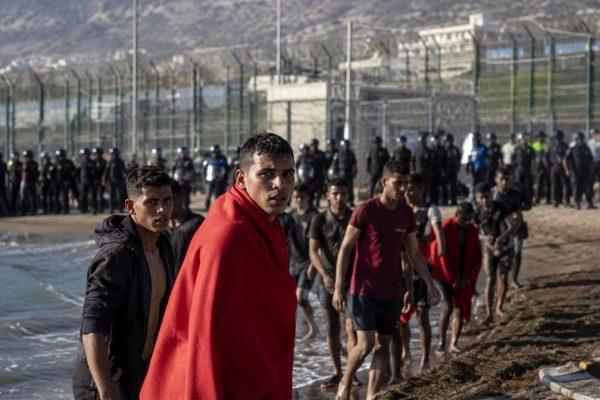
For thousands of Moroccans, the small Spanish enclave of Ceuta on Africa's northern coast represents a gateway to Europe. But stepping onto Spanish soil is only the beginning of a far more complicated journey—one shaped not by geography, but by legal procedures that can lead to asylum, return to Morocco, or months of uncertainty.
Ceuta, along with its sister enclave Melilla, sits on the African continent yet belongs to Spain and the European Union. That unique status makes it one of the EU's only land borders with Africa, and a powerful symbol of hope for migrants seeking better economic opportunities or international protection. Yet the reality for those who arrive is often far less straightforward than they imagined.
Does reaching Ceuta mean you can enter mainland Spain?
No. Although Ceuta is Spanish territory, it operates under a special border regime. Migrants cannot simply board a ferry to the mainland. They must pass immigration controls, and many are prevented from traveling while authorities determine their legal status. The enclave is not an open door to Europe; it is a checkpoint where futures are decided.
Once in Ceuta, each case is evaluated individually. Depending on circumstances, migrants may apply for international protection or asylum, be processed under Spain's immigration laws, voluntarily return to Morocco, or remain temporarily in reception facilities while their case is reviewed. A recent Spanish Supreme Court ruling clarified that migrants intercepted after arriving by sea cannot automatically be subjected to the expedited “hot return” procedure used at the land border fences. Instead, they must receive the legal guarantees of Spain's ordinary immigration process, including an individual review of their case. That ruling does not grant an automatic right to stay or travel onward.
Despite the hopes of many who crossed during the recent surge, most did not remain. Spanish authorities report that tens of thousands returned to Morocco within days, many voluntarily after realizing they could not easily continue to the mainland. Others faced overcrowding, limited resources, and deep uncertainty about what would happen next.
For those who do stay, Ceuta often becomes a temporary waiting point rather than a final destination. Some remain for weeks or months while legal procedures move forward, while others choose to return home after concluding that reaching mainland Europe is unlikely. The recent crisis has once again shown that crossing into Ceuta is only the first step—the real challenge begins after arrival, when legal procedures, not geography, determine whether a migrant can build a future in Spain or must return home.
This story is part of our ongoing coverage of migration at Europe's southern border. For more context on why so many Moroccans are making the perilous journey, read our analysis of the crisis behind the surge. And for a different kind of crossing—one that captured global attention—see how Cape Verde's goalkeeper nearly quit before his World Cup heroics.