Florida's landscape is changing fast, and not in ways that favor its native woods. Across the state, from the pine flatwoods of the Panhandle to the scrublands of Central Florida, developers and farmers are clearing land at a pace that puts the Sunshine State near the top of a troubling national list. New satellite analysis from Clark University shows Florida lost roughly 658,000 acres of tree canopy between 1990 and 2018, a rate that ranks fourth in the country. That's about 23,000 acres a year—an area larger than Manhattan—converted into subdivisions, shopping centers, and citrus groves.
For many Latinos in Florida, this isn't just an environmental story. It's about the places we call home, from the sprawling suburbs of Miami-Dade to the agricultural heartlands around Immokalee and Homestead. As new arrivals and long-time residents alike chase the Florida dream, the very character of the land is being reshaped. The question is whether we can grow without losing what makes Florida special.
Where the trees go: housing vs. farming
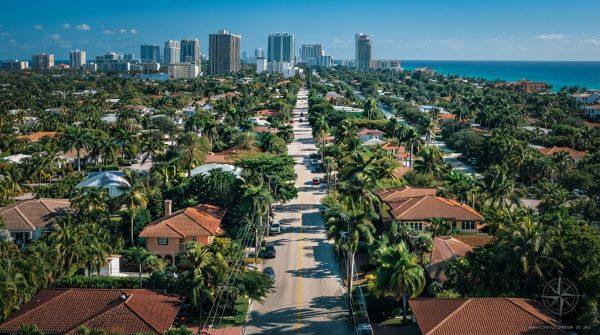
The Clark University study, published in Scientific Reports, found that nearly 55% of the cleared forest land in Florida was paved over for residential development. The remaining 45% went to agriculture. But the split isn't uniform. In northern counties, farmland expansion is the main driver, as cattle ranches and row crops push into former woodlands. In the south, especially along the I-4 corridor and the coasts, it's all about rooftops.
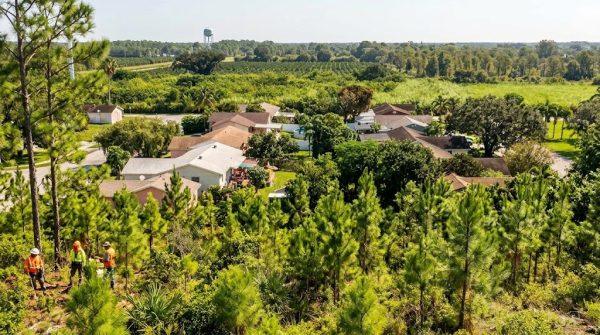
This pattern is visible from the air. Drive from Orlando to Tampa and you'll see cranes and bulldozers where oak hammocks once stood. In Lee County, once a haven for gopher tortoises and scrub jays, new master-planned communities are rising on cleared land. The pressure is relentless, and it's not just about trees. Every acre of forest lost means less habitat for wildlife, more runoff into our springs and estuaries, and a hotter, less resilient landscape.
Conservation efforts are falling short
Florida has tried to fight back. The Florida Wildlife Corridor, established by a 2021 law, aims to connect nearly 18 million acres of natural land, with about 10 million already in public hands. But as 1000 Friends of Florida points out, the corridor doesn't cover the southeastern part of the state, leaving critical ecosystems exposed. And while conservation easements allow private landowners to keep their property while giving up development rights, they're not enough to stop the tide.
Meanwhile, the state's flagship land-buying program, Florida Forever, has seen its funding slashed. This year, it received no new money, despite having protected over a million acres in its 26-year history. That's a blow to efforts to preserve what's left, especially as municipal planning boards have already earmarked nearly 1.1 million acres inside the corridor and another 3 million outside it for future urban expansion by 2070.
It's a familiar story for those who've watched Florida's growth machine churn. But there's a cultural dimension too. Many of the state's new residents are from Latin America and the Caribbean, bringing with them a deep connection to the land. In places like Miami, where rising seas are already turning streets into canals, the loss of natural buffers makes flooding worse. And as property tax breaks drive up rents, the pressure to build more housing only intensifies.
What's at stake
Environmental advocates argue that the next few years are critical. Updated satellite imagery through 2025 will show whether the trends are accelerating or leveling off. But without stronger protections, the outlook is grim. The National Audubon Society warns that habitat fragmentation threatens birds like the Florida scrub-jay, which depends on the state's unique scrub habitat. And as past environmental mistakes like the tire reef experiment have shown, once natural systems are damaged, recovery can take decades—if it happens at all.
For Latinos who've made Florida home, the stakes are personal. Whether it's the immigrant families who've built lives in the state's agricultural towns or the young soccer stars growing up in its suburbs, we all depend on the land. The question is whether we can find a way to grow that doesn't erase the very things that drew us here.
As the state continues to trade forests for neighborhoods and farmland, the choices made today will shape Florida for generations. It's not just about trees—it's about the kind of place we want to live in. And that's a conversation worth having, in every language we speak.