In the quiet fields of Clark County, Washington, a 10-acre plot has become more than just farmland. The 78th Street Heritage Farm, run by the organization Latinos Unidos y Floreciendo, is now a crucial support network for immigrant families who are too afraid to step outside. With ICE raids intensifying across the region, many families in nearby towns like Woodland and Kelso have chosen to stay indoors, relying on this farm for fresh, culturally familiar food.
A refuge in the fields
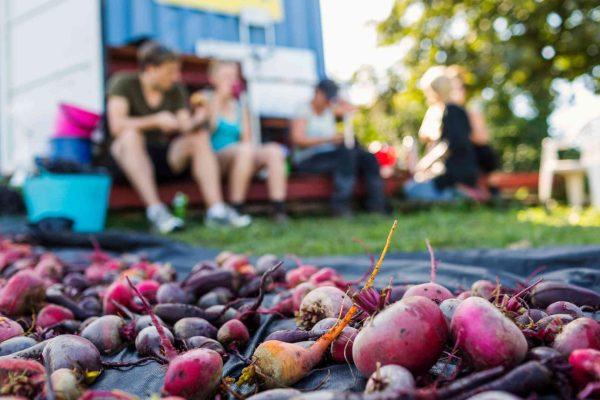
What started as a community gardening project has evolved into a lifeline. The farm grows traditional vegetables—jalapeños, tomatillos, and other staples—that are hard to find in local grocery stores. Volunteers harvest these crops and distribute them free of charge to families who are avoiding public spaces. The fear of detention is so pervasive that even children approach the distribution points to pick up bags of sweet bread and champurrado, while their parents remain hidden at home.
Michelle Vazquez, the executive director of Latinos Unidos y Floreciendo, explains the shift: “We realized that our role had to change. It wasn’t just about growing food anymore; it was about protecting our community.” The farm has become a trusted intermediary, using word-of-mouth networks to reach families without exposing them to risk.
Discretion and trust
In response to heightened surveillance and the recent detention of a volunteer near the farm, the organization has overhauled its distribution methods. Public events and social media promotions have been suspended. Instead, they rely on personal recommendations and discreet coordination to ensure that food reaches those in need. Rachel Feston, the farm’s agricultural manager, emphasizes the importance of this approach: “We can’t afford to be visible. Our priority is the safety of the families we serve.”
The farm’s role extends beyond food. During distribution, volunteers engage with recipients in Spanish, sharing jokes and offering a moment of relief from the constant stress. This human connection allows the team to identify families who may need additional help, such as those who have recently lost a relative to detention. The farm has become a “human radar,” as Vazquez puts it, for the community’s well-being.
Financial resilience amid uncertainty
The farm has also faced financial challenges. A temporary freeze on federal funds from the Department of Government Efficiency threatened its operations. While USDA funding has been restored, it is set to expire in May. Despite this, the organization continues to seek alternative sources of support to keep the harvests going and the distribution network intact.
“We’ve learned to be resourceful,” says Vazquez. “Our community depends on us, and we won’t let them down.” The farm’s resilience is a testament to the power of collective action. It has become a symbol of dignity and resistance, proving that even in the face of fear and uncertainty, neighbors can come together to create a safe space.
For many families, the farm is more than a source of food—it’s a beacon of hope. As ICE enforcement continues to disrupt lives across the region, this small plot of land stands as a reminder that community care can prevail. The farm’s work is a model for other Latino communities facing similar challenges, showing that solidarity can transform land into a protective refuge.
As the political climate remains tense, the farm’s mission is more critical than ever. It is a living example of how cultural roots and mutual aid can sustain a community through the hardest times. For the families of Clark County, the farm is not just a place to get vegetables—it’s a place where they are seen, heard, and valued.