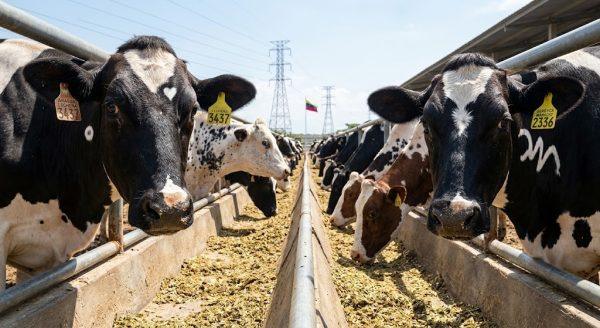
The first U.S. death from avian influenza in 2026 has been confirmed in Washington state, putting a sharp focus on the ongoing spread of the virus among dairy cattle. The victim, who had underlying health conditions, had close contact with infected cows, according to state health authorities. This marks a critical moment in the outbreak that has been simmering in American livestock since early 2024.
The Yakima Health District reported that two additional farmworkers experienced mild symptoms and did not require hospitalization. In total, Washington has recorded three human infections during this epidemiological period. The deceased individual was part of a cluster linked to dairy farms in Yakima County, where at least 33 facilities have tested positive since October 8. The outbreak has also extended into neighboring Benton County, which is under a quarantine order.
Virus persists in dairy herds, raising concerns for farmworkers
Genetic sequencing has identified the circulating strain as variant B3.13, which has been present in American herds since the spring of 2024. So far, the virus shows no markers of mammalian adaptation, but its persistence in livestock is troubling. Dr. William Schaffner, an infectious disease specialist at Vanderbilt University Medical Center, warned that the virus poses a severe threat to individuals with chronic illnesses, mirroring the vulnerability seen in the Washington fatality.
“This is a reminder that avian influenza is not just a bird problem—it’s a farmworker problem, and it can be deadly for those with underlying conditions,” said Dr. Schaffner in a statement. The overlap with the winter flu season complicates diagnosis, as respiratory illnesses are already circulating at elevated levels across the region.
Epidemiologists from the Johns Hopkins Bloomberg School of Public Health emphasize that the pathogen remains active among livestock populations and is not disappearing on its own. They advocate for strict protective measures for rural employees, including proper personal protective equipment and enhanced biosecurity protocols on commercial farms.
Preventive measures and food safety
For the general public, the risk remains low, but health officials are issuing clear guidance. Pasteurized milk and properly cooked dairy products are safe to consume, as the pasteurization process kills the virus. However, raw milk and raw cheeses from infected animals can harbor the pathogen, and health agencies strongly advise against consuming them.
Farm surveillance is critical. Continuous monitoring of dairy operations can detect evolving strains like B3.13 and help prevent further zoonotic transmission. Workers handling animals that test positive must use appropriate protective gear, and farms should implement strict hygiene protocols.
“The key is to break the cycle of transmission between livestock and humans,” said Dr. María Elena Pérez, a veterinary epidemiologist at the University of California, Davis, who has been tracking the outbreak. “We need to protect the people who put food on our tables.”
As the virus continues to circulate, federal agencies are intensifying inspections and updating guidelines. The U.S. Department of Agriculture and the Centers for Disease Control and Prevention are working with state and local health departments to monitor viral mutations and assess the risk of broader spread.
While international health bodies have ruled out a generalized community emergency for unexposed citizens, the situation underscores the importance of vigilance. The ongoing evolution of the virus in livestock will dictate future preventive measures, and experts stress that the agricultural workforce—often Latino and immigrant—must be prioritized in public health responses.
For Latino communities across the rural United States, many of whom work in dairy and poultry operations, this is a direct concern. Health officials are urging farmworkers to report symptoms early and to take advantage of seasonal flu vaccines, which can reduce the risk of co-infection and severe complications.
As the investigation continues, the memory of this first death serves as a stark reminder of the human cost behind the outbreak. The path forward lies in robust surveillance, transparent communication, and a commitment to protecting those who are most exposed.