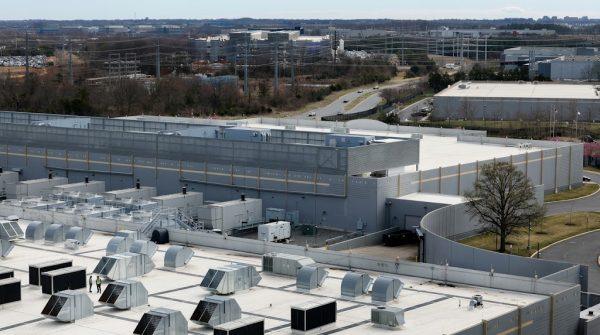
Texas voters delivered a clear message on Tuesday, rejecting municipal tax incentives and utility expansion plans for large-scale technology projects. The outcome has sent ripples through financial markets, prompting investors to reassess the future of AI infrastructure in the Lone Star State.
The election results came as Wall Street was riding a wave of optimism, with S&P 500 futures up 1%, Nasdaq futures gaining 1%, and the Dow Jones Industrial Average climbing 1.4% on projections of a Democratic congressional takeover. But the Texas vote introduced a new variable: a potential slowdown in the state's booming data center industry.
Investment firms are now adjusting their AI portfolios, wary of growing uncertainty around energy grid capacity. The 10-year Treasury yield rose to 4.93% during morning trading, and the VanEck Semiconductor ETF (SMH) added 1.6% before the opening bell. Analysts issued an AI investors warning, pointing to long-term power constraints as a major risk for tech companies.
The energy sector also took note, with West Texas Intermediate crude oil dipping less than 1% to $95.24 per barrel, reflecting expectations of slower industrial electricity demand. European markets saw midday gains, while Asian indices fluctuated overnight as investors awaited political clarity. Tech equities outside Japan advanced, but institutions are now demanding community sustainability guarantees before committing capital to new data facilities.
AI investors warning and regional energy constraints
Despite the local infrastructure challenges, Arista Networks (ANET) surged 11.4% in pre-market trading after reporting third-quarter earnings that beat expectations and issuing an optimistic sales outlook. However, independent analysts repeated the AI investors warning, emphasizing that power grid bottlenecks and ballot-box pushback could freeze multi-billion-dollar infrastructure developments.
Global equity markets are also bracing for quarterly earnings from Qualcomm (QCOM), McDonald’s (MCD), and Uber Technologies (UBER), adding to a day of high volatility. The economic calendar is packed: the Mortgage Bankers Association weekly mortgage applications report at 7:00 a.m. ET, the ADP October employment report at 8:15 a.m., and the September international trade report at 8:30 a.m. Investors are also monitoring the final U.S. Composite PMI for October at 9:45 a.m., the ISM Services Index at 10:00 a.m., and the EIA weekly petroleum status report at 10:30 a.m., all while hedging against political risk that could delay the rapid deployment of generative AI algorithms.
Economic indicators and commodities performance
- Crypto gains traction: Bitcoin traded at $78,530.66 during early morning hours, maintaining resilience against local regulatory shifts.
- Safe-haven metals: Spot gold reached $4,052 per ounce, attracting institutional capital seeking protection against energy market volatility following the Texas election results.
- Trade balance reports: The international trade in goods and services report released at 8:30 a.m. projects structural supply chain adjustments for microelectronics imports.
- Inventory assessments: The EIA weekly petroleum status report scheduled for 10:30 a.m. will provide crucial data to measure heavy industrial consumption.
- AI investors warning bulletin: The broader implications of the infrastructure pushback confirm that power grid access will dictate future valuations for artificial intelligence companies.
The Texas vote is a reminder that the state's economic boom, driven in part by tech expansion, faces new political and demographic realities. As birth rates fall, the long-term labor pool may shrink, adding another layer of complexity for companies planning massive data centers.
For Latino communities across Texas, the outcome also underscores the importance of local political engagement. The rejection of these incentives reflects a broader civic desire for oversight, a sentiment that resonates in historic wins by Latino candidates in the state. As new leaders take office, they will face pressure to balance economic growth with community needs.
Looking ahead, global market performance will depend heavily on how tech giants adapt to evolving local regulatory frameworks. This environment enforces strict civic oversight parameters, where expanding computing infrastructure will consistently require community backing prior to executing large-scale capital investments. The AI investors warning issued across key financial desks remains firm, with Texas election results serving as a permanent benchmark for regional tech developments.
In the meantime, investors are watching the Texas Senate race, where a shift in control could further influence energy and tech policy. The intersection of politics and technology is now front and center, and the decisions made in Austin will echo far beyond the state's borders.