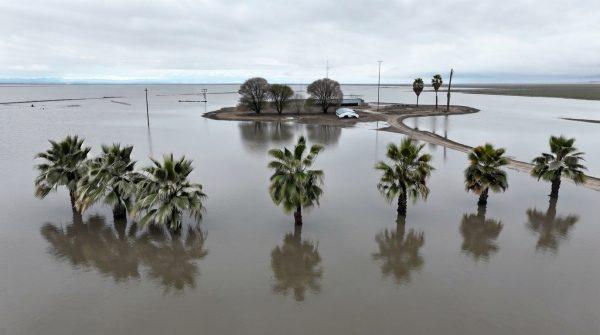
El Niño is making its presence felt along the Pacific coast, with ocean waters running unusually warm and sea levels staying elevated well above normal. For California, that means a prolonged period of higher tides and a greater risk of coastal flooding, even on days when no storm is on the horizon.
Scientists are tracking a massive pulse of warm water moving eastward across the Pacific. This is part of a classic El Niño pattern, where weakened trade winds allow warm water to slosh toward the Americas. The result is a series of Kelvin waves—broad, slow-moving swells that can lift sea levels by several centimeters and keep them high for weeks or months.
According to ocean researchers, these waves travel thousands of miles before reaching the West Coast, where they pile up against the shore. Dillon Amaya, a research scientist at North Carolina State University, explains that the energy involved is immense: “Thousands of square kilometers of water are moving together, and when that energy reaches the coast, it has to go somewhere.” The effect may be subtle to beachgoers, but it can push tides well above normal and make everyday waves more damaging.
How high could sea levels go?
Current projections suggest that sea levels along parts of the California coast could remain about 15 centimeters (roughly 6 inches) above average for several months. That might not sound like much, but when you add a high tide or a winter storm, the extra water can turn a routine wave into one that overtopps seawalls and floods streets.
Historical comparisons are sobering. During the powerful El Niño events of 1982–83 and 1997–98, sea levels along some stretches of the Pacific coast rose as much as 36 centimeters (14 inches) above normal. Those winters brought fierce storms, severe coastal erosion, and landslides. Scientists now use those events as benchmarks to gauge how serious the current situation could become.
Mark Merrifield, a researcher at the Scripps Institution of Oceanography, warns that the combination of high sea levels and seasonal high tides is particularly dangerous. “When waves arrive during high tide, you get overflows that can damage infrastructure and set new records for water levels,” he says.
Beyond the coast: ecosystems and wildlife
The effects aren’t limited to shorelines. Warmer ocean temperatures are already disrupting marine life along the California coast. Fish populations are shifting, and some species are moving into new areas in search of cooler water. Whales, in particular, are being spotted closer to shore than usual, which increases the risk of ship strikes.
Local environmental agencies are monitoring water temperatures closely to understand how these changes might affect fisheries and fragile coastal habitats. The long-term outlook is uncertain, but the immediate concern is the elevated flood risk.
What communities are doing
From San Diego to Eureka, local authorities are taking steps to prepare. Reinforced barriers are being placed along vulnerable stretches of coastline, and emergency response teams are updating their flood protocols. Municipal planners are also reviewing evacuation routes and communication systems to make sure residents know what to do if water starts rising.
Officials urge coastal residents to stay informed and review their own safety plans. That means knowing your flood risk, having an emergency kit ready, and paying attention to warnings from local agencies. As one emergency manager put it, “The ocean is going to do what it’s going to do—our job is to be ready.”
For now, the watch continues. The National Oceanic and Atmospheric Administration (NOAA) is keeping a close eye on El Niño’s evolution, and updates are expected throughout the winter. In the meantime, Californians along the coast would do well to keep an eye on the tide charts.
For more on how climate patterns are affecting the state, check out our coverage of hurricane moisture and flood risks and flood-prone zones in New York. And if you’re concerned about your budget, you might also want to see October SNAP payment dates.