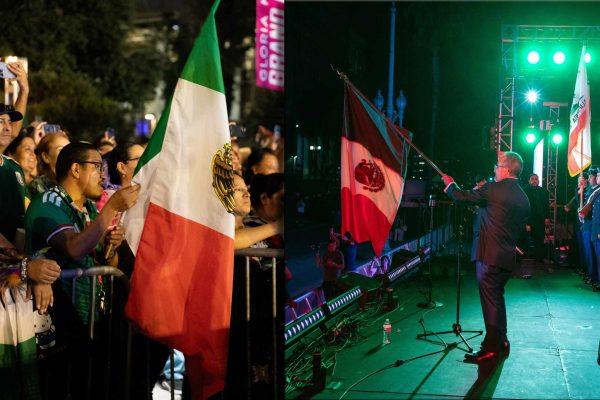
The steps of Los Angeles City Hall turned into a sea of green, white, and red as the city celebrated El Grito de Dolores, the 1810 call to independence that ignited Mexico's fight for freedom. On this night, the heart of LA beat with the rhythm of Mexican pride, drawing over 1,200 people to the civic center for a ceremony that blended tradition, politics, and community.
Consul General of Mexico, Carlos González Gutiérrez, led the official proceedings, delivering the iconic grito—a passionate cry of ¡Viva México!—that echoed through the crowd. The ceremony included the ringing of a bell, a symbolic nod to Father Miguel Hidalgo's original call in the town of Dolores, and the national anthem, sung with fervor by attendees of all ages.
A Celebration of Heritage and Resilience
City leaders used the occasion to honor the deep roots and enduring contributions of the Mexican American community in Southern California. Mayor Karen Bass spoke of El Grito as a symbol of freedom and perseverance, acknowledging the immigrant families who have shaped the social and economic fabric of Los Angeles. Councilmembers Imelda Padilla and Eunisses Hernández shared personal reflections, connecting their own family histories to the broader narrative of Mexican resilience in the United States.
The event was more than a formal ceremony; it was a vibrant gathering that featured musical performances, traditional cuisine, and opportunities for intergenerational connection. Families brought children, grandparents shared stories, and young people danced to the sounds of mariachi and banda, reinforcing the cultural continuity that makes LA a global hub of Mexican identity.
Controversy Over Corporate Sponsorship
This year's celebration, however, was not without its tensions. Community members voiced strong opposition to the involvement of Home Depot as a sponsor, citing the company's past cooperation with ICE that led to immigration enforcement actions at its properties. In response, Councilmember Imelda Padilla issued an official apology and announced the cancellation of Home Depot's sponsorship. Organizers emphasized their commitment to keeping the event a safe and welcoming space for all immigrant families, a stance that resonated with many in attendance.
The decision reflects a broader awareness within the Latino community about the intersection of corporate interests and immigrant rights. As one attendee put it, “Our celebration should not be funded by those who harm our people.” The move was widely praised on social media, with many commending the councilmember for listening to community concerns.
Historical Roots and Modern Meaning
The origins of El Grito date back to September 16, 1810, when Father Miguel Hidalgo y Costilla, a priest in the town of Dolores (now Dolores Hidalgo, in Guanajuato), called for rebellion against Spanish colonial rule. While historians debate the exact words Hidalgo spoke—some suggest he invoked the Virgin of Guadalupe, others that he called for an end to colonial taxation—the act itself became the defining moment of Mexico's struggle for independence. The tradition was officially institutionalized as a state ceremony in 1845 under President Antonio López de Santa Anna, and it has since been celebrated annually across Mexico and in cities with large Mexican populations, such as Los Angeles.
In Southern California, El Grito has become a civic tradition that transcends generations. The turnout at City Hall is a testament to how Mexican patriotic celebrations have woven themselves into the fabric of LA's public life. For many, it is a way to honor their roots while affirming their place in American society. As Councilmember Padilla noted, “This is not just a Mexican holiday; it is a Los Angeles holiday.”
The event also served as a reminder of the ongoing struggles and triumphs of the Mexican diaspora. In a city where nearly half of the population identifies as Latino, El Grito is a moment of unity and visibility. It is a chance to celebrate the contributions of Mexican Americans in every field—from labor and education to arts and politics—and to reflect on the work that remains to ensure equality and justice for all.
For those who missed the celebration, there are still opportunities to join in the festivities. Fiestas Patrias 2026 offers a guide to other events across Texas and Los Angeles. And for a deeper dive into the cultural legacy, East LA's 80th Mexican Independence Parade is a testament to the enduring spirit of the community.
As the night wound down, the echoes of ¡Viva México! lingered in the air, a reminder that the fight for independence, in all its forms, continues. In Los Angeles, El Grito is not just a historical commemoration; it is a living, breathing expression of identity, resilience, and hope.