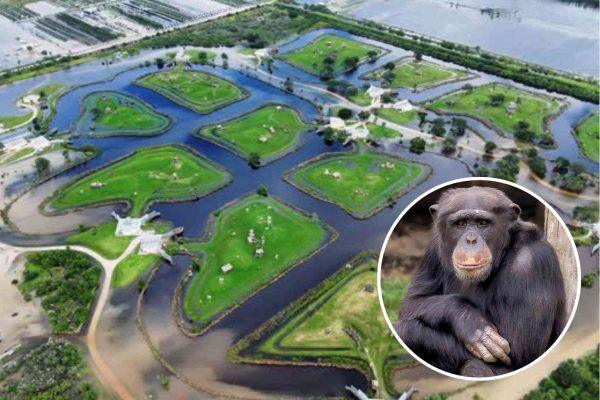
When historic floods turned the grounds of Save the Chimps sanctuary in Fort Pierce, Florida, into impassable waterways, the staff faced a logistical nightmare. With roads submerged and golf carts—normally used to haul over 1,300 kilograms of daily food—rendered useless, they had to think fast. The solution came from above: a delivery drone, originally acquired for emergencies, was pressed into service to reach Kaleb, a 38-year-old chimpanzee stranded in an open enclosure surrounded by rising water.
Video captured the moment the drone descended, carrying bananas, oranges, and a blanket. Kaleb, clearly delighted, grabbed his feast and later crossed a rope bridge to safety. The images resonated deeply with the community, offering a rare bright spot amid the devastation of the storms.
An all-hands effort to protect the chimps
Save the Chimps, which spans 61 hectares and houses nearly 200 chimpanzees rescued from research labs, the entertainment industry, and the illegal pet trade, faced a crisis that went beyond Kaleb. Staff camped on-site to ensure medical and nutritional routines continued uninterrupted. When the sanctuary's all-terrain swamp vehicle broke down, they resorted to tractors and personal pickup trucks to ferry supplies. The floods also brought unexpected visitors—small alligators that drifted near the kitchen, adding another layer of challenge to an already tense situation.
“We were determined to keep everyone safe, both the chimps and our team,” said a sanctuary spokesperson. “The drone was a game-changer, but it was the dedication of our staff that made the difference.”
The flooding in Florida is part of a broader pattern of extreme weather that scientists link to El Niño and climate change. As El Niño's new climate threat becomes more pronounced, communities across the state are grappling with how to adapt. The sanctuary's innovative use of technology offers a glimpse into the kind of resilience that will be needed.
As waters receded over the weekend, staff cleared about 20% of the internal roads, but the damage was extensive. The organization has launched a fundraising campaign, with a generous donor pledging to match every contribution. The story of Kaleb and his drone-delivered bananas has touched hearts far beyond Florida, underscoring the human commitment to protecting vulnerable species in an era of climate change.
For the Latino community, this tale of ingenuity and care resonates with our own traditions of resourcefulness and solidarity. Whether it's a Venezuelan immigrant winning a seat in the Florida House or students organizing massive food drives, we know that in times of crisis, we come together. The sanctuary's efforts are a reminder that compassion knows no borders.
As Florida continues to face the impacts of tax cuts that may underfund flood defenses, stories like Kaleb's highlight the urgent need for investment in climate resilience. For now, the chimps at Save the Chimps are safe, and Kaleb is back to his usual self, enjoying his bananas and the care of a team that refused to let a flood stand in the way.