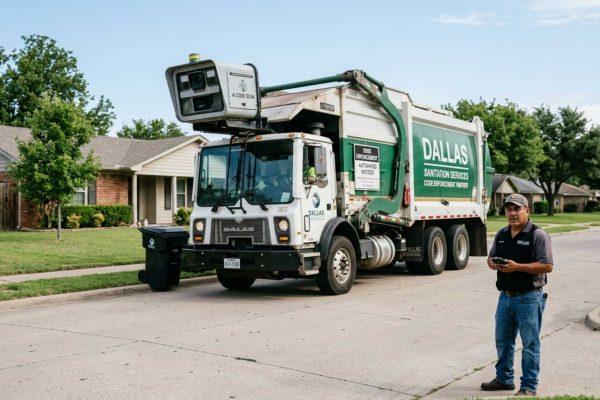
In Dallas, Texas, the familiar rumble of garbage trucks now carries a new purpose. These municipal vehicles, once tasked solely with collecting waste, have been outfitted with artificial intelligence cameras from a company called City Detect. As they roll through residential streets on their regular routes, they scan homes and assign them a "blight score" based on outward appearance. The system automatically flags issues like overgrown lawns, sidewalk debris, or peeling paint, effectively turning trash collection into a continuous property surveillance operation.
The program, which has been running for several months, has already identified more than 21,000 potential code violations across the city. Homeowners in affected areas have received formal warning notices for aesthetic issues that might otherwise go unnoticed. But the rollout has sparked a heated debate about privacy, equity, and the role of technology in local governance.
South Dallas bears the brunt
An investigative report by NBC 5 Investigates found that the AI-generated enforcement notices are not evenly distributed. Heat maps of flagged properties show a heavy concentration in South Dallas, a region where median household incomes are significantly below the citywide average. Critics argue that the system effectively penalizes residents who lack the time or resources to maintain pristine property aesthetics on a weekly basis.
"This is a tax on poverty," said María González, a community organizer in Oak Cliff. "People are already struggling to make ends meet. Now they're getting fined because their grass is a little tall or their fence needs paint. It's not fair."
The city, however, maintains that the program is designed to improve neighborhood quality and safety. Officials point out that the AI only flags potential issues, and that all citations are reviewed by municipal staff before any official action is taken. They also note that the system blurs faces and license plates to protect privacy.
Corporate safeguards vs. public concern
City Detect, the technology firm behind the cameras, has emphasized its commitment to privacy. In a statement, the company said the software automatically anonymizes images by blurring human faces and vehicle plates, and that it does not link to federal law enforcement databases. They also stressed that every flagged image is manually reviewed by city employees before a warning or citation is issued.
But privacy advocates remain skeptical. "The manual review doesn't address the fundamental problem," said Laura Hernández, a policy analyst with the Texas Civil Liberties Union. "The system is still surveilling people in their own homes, and it's doing so in a way that disproportionately affects marginalized communities. That's a civil rights issue."
The debate has reached the Dallas City Council, where some members have proposed budget amendments to cut funding for the camera program. A formal vote has been postponed pending a public hearing later this year. The outcome could set a precedent for other cities across the country that are considering similar automated enforcement systems.
Broader implications for Latino communities
For Latino residents in Dallas, the issue hits close to home. Many families in South Dallas and other affected areas are immigrants or descendants of immigrants, and they often face language barriers when dealing with city bureaucracy. A notice about a code violation can be confusing and intimidating, especially if it's written in English and arrives without explanation.
"We've seen cases where people didn't even know they had a violation until they got a fine," said Carlos Ramírez, a housing advocate with the Latino Community Center. "The city needs to do a better job of communicating with these communities, and it needs to think about whether this kind of surveillance is really the best way to improve neighborhoods."
The situation in Dallas is being watched closely by municipalities in other states, including California, Arizona, and Florida, which are testing similar AI-powered enforcement tools. For now, the program continues to operate, and residents are left to wonder what the cameras will see next.
As the city grapples with these questions, the broader issue of technology's role in public life remains unresolved. For many, the garbage truck is no longer just a garbage truck—it's a reminder that in the age of AI, even the most mundane services can become tools of surveillance.
For those interested in related issues, check out our coverage of Texas red tide health alerts and Saharan dust affecting allergies during Fiestas Patrias.