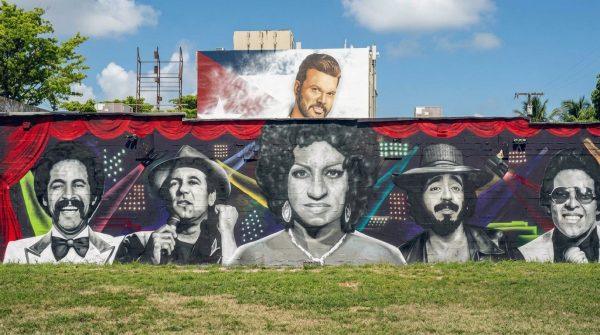
Little Havana lost a beloved piece of its soul this week. The towering mural of Celia Cruz, Héctor Lavoe, Tito Puente, and other salsa legends that graced the corner of Southwest Eighth Street and Nineteenth Avenue has been painted over. The building's owner, Santos Campaneria, says he had no choice: mounting building inspection fees and endless bureaucratic demands were costing him nearly $50,000, with no help from the city. For a small business owner, that's a crushing burden.
The mural, known as The Greatest Legends of Salsa, was inaugurated on March 16, 2023, after weeks of intense nighttime work by Venezuelan artist Pedro Aguiar and the Kcull Life Foundation. It was a labor of love, created without any government funding. Now, its sudden disappearance has sent shockwaves through the community.
A cultural landmark erased
For many in Miami's Cuban exile community, Celia Cruz is more than a singer—she's a symbol of resilience and identity. The mural was a daily reminder of that legacy, a place where families could bring their kids and point to the Queen of Salsa's face. Its removal feels like a betrayal.
“This is not just paint on a wall,” said one local artist who asked to remain anonymous. “This is our history, our memory. When you erase it, you erase a part of who we are.”
The outcry has been loud and immediate. Thousands have taken to social media, demanding answers from city officials. Community leaders are calling for urgent action, arguing that the mural was a vital piece of the neighborhood's cultural fabric. They point out that similar murals honoring artists like Willy Chirino face the same threats, and that cultural tourism brings millions to Miami's economy each year. The irony is hard to ignore: the city profits from the culture, yet offers little protection when it's under pressure.
What's next for the mural?
District Commissioner Rolando Escalona has stepped in, scheduling meetings with Campaneria to discuss possible restoration. The city is exploring financial assistance programs that could help small business owners cover mandatory maintenance costs. Meanwhile, Pedro Aguiar, the original artist, has vowed to create an even better version if given the chance.
But the damage may already be done. The mural's removal is a stark reminder of how fragile our cultural landmarks can be. As Latino stars on mixed heritage and identity have noted, preserving our stories is essential to authentic representation. And as Jeff Bezos credits his Cuban father, who arrived in Miami alone, the city's immigrant roots run deep.
For now, the wall stands bare, a blank canvas that once told a powerful story. The community is watching, waiting to see if the city will step up or let another piece of Little Havana's heritage slip away. As Miami rents dip slightly, the cost of preserving culture remains high. The question is: who will pay it?