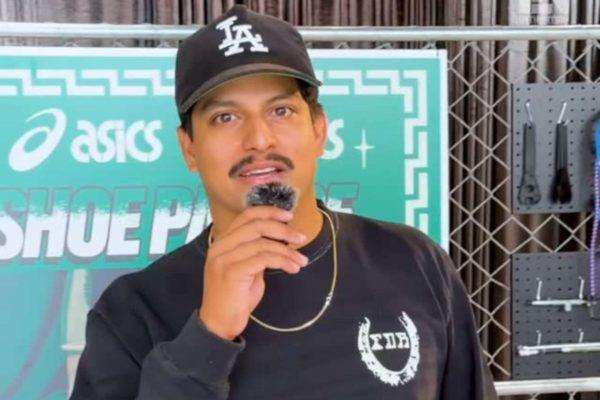
In the heart of Los Angeles, in the historic Aliso Village neighborhood, Jaime Rosas has built more than a workshop—he's created a cultural hub. Fábrica de Rosas, his brand, started as a passion for custom bikes and textile design, but it has grown into a space where Chicano identity, urban cycling, and community converge. After a transformative trip to Mexico City, Rosas reconnected with his ancestral roots and decided to channel that energy into a project that honors his heritage while pushing creative boundaries.
From Aliso Village to global collaborations
What began as a local shop for bike repairs and custom builds quickly caught the attention of major athletic brands. Fábrica de Rosas partnered with Vans on a special edition, and more recently, during Hispanic Heritage Month, teamed up with ASICS and Shoe Palace for a launch in Hollywood. The event brought together cyclists, neighbors, and fans for an evening of live music, traditional food, and one-of-a-kind bikes—a celebration of Mexican-American pride that resonated far beyond the storefront.
These collaborations are not just about branding; they're about representation. Rosas sees his work as a way to put Chicano art and culture on an international stage. "We're not just making bikes or clothes," he says. "We're telling the story of our community, our families, and our roots."
A cultural platform on two wheels
For younger generations of Latinos in the U.S., Fábrica de Rosas offers more than products—it offers a sense of belonging. The brand organizes group rides, community events, and traditional lotería nights, turning the workshop into a gathering place where neighbors connect and culture thrives. It's a model that shows how preserving identity can be a powerful driver of success in competitive markets.
Rosas's journey is a reminder that authenticity resonates. His designs blend vintage BMX aesthetics with contemporary streetwear, creating a style that feels both nostalgic and fresh. The attention to detail—from the stitching on a jacket to the geometry of a custom frame—reflects a deep respect for craft and heritage.
This approach has also opened doors beyond cycling. The brand's influence now extends into fashion and lifestyle, with collaborations that reach audiences who may never have picked up a bike. But for Rosas, it's all connected: the bike is a vehicle for community, and the clothes are a canvas for identity.
Los Angeles has long been a crossroads of cultures, and Fábrica de Rosas is a testament to that. The brand's success echoes other stories of Latino creativity in the city, like the Día de Muertos celebrations that bring communities together each year. It's also part of a broader wave of Mexican-American entrepreneurship that's reshaping industries.
For those looking to understand the future of Latino culture in the U.S., Rosas's work offers a blueprint. It's not about assimilation; it's about integration—bringing your full self to the table and letting your heritage be a strength. As he puts it, "Our roots are not a limitation. They're our superpower."
The workshop in Aliso Village remains the heart of the operation, a place where custom bikes are built by hand and where every detail matters. But the impact of Fábrica de Rosas extends far beyond those walls. Through partnerships with global brands and a growing community of riders, Jaime Rosas is proving that Chicano culture can lead the way in design, sport, and style.
As the brand continues to evolve, one thing is clear: this is more than a business. It's a movement that celebrates the richness of Mexican-American identity, one pedal stroke at a time.