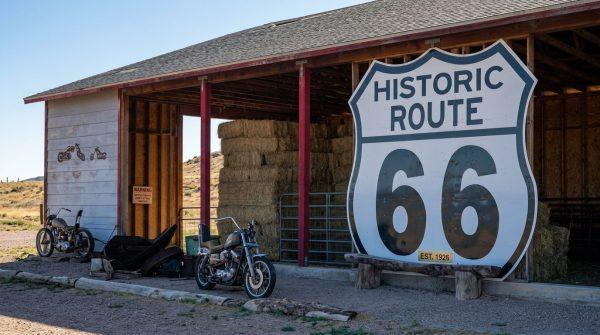
At the western end of Route 66, where the Mother Road meets the Pacific, a mid-century coffee shop turned iconic diner is at the center of a modern tug-of-war. The former Penguin Coffee Shop, now home to Mel's Drive-In, sits on a half-acre lot at 1670 Lincoln Blvd., a spot that marks the official terminus of the historic highway. But that corner could soon trade its Googie roofline for an eight-story apartment building.
Irvine-based developer ValueRock Realty filed an application on Sept. 18 to demolish the structure and replace it with a mixed-use complex. The proposal includes 138 residential units—20 studios, 90 one-bedrooms, and 28 two-bedrooms—plus 5,672 square feet of retail space. Fourteen of the apartments would be set aside for lower-income households, with the rest at market rates. The building would rise 85 feet, exceeding the area's 65-foot height limit, and the developer is seeking density bonus incentives under state law to make that happen.
A clash between housing needs and historic preservation
This project highlights a familiar dilemma across California: how to add housing when every available parcel is precious, especially in coastal cities like Santa Monica. But here, the conflict is sharpened by the site's cultural weight. The building, designed by the renowned firm Armet & Davis in 1959, is a textbook example of Googie architecture—think steeply pitched roofs, sweeping glass windows, and a space-age optimism that defined roadside America. It's also the last stop for travelers who have driven the full 2,448 miles from Chicago.
ValueRock purchased the property for $6.2 million in 2020 and listed it for sale at $26 million in 2025. In its application, the company stated it knew of no historic resources on the site—a claim that rankles preservationists, who note that the community has long recognized the building's significance. The Santa Monica Conservancy and the Los Angeles Conservancy have jointly nominated the former Penguin Coffee Shop for local landmark designation, a move that would trigger a 75-day waiting period on any demolition permit for buildings over 40 years old.
“It’s not about saving a modern restaurant. It’s about preserving really important Googie architecture,” said Nina Fresco, vice president of the Santa Monica Conservancy.
The Landmarks Commission is set to vote on the designation on Dec. 14. If approved, the owner could appeal to the City Council. Meanwhile, Mel's Drive-In, which reopened the site in 2018 after a careful restoration that included stone cladding, terrazzo floors, and a penguin statue atop the neon sign, plans to stay put. “We are going to be here until 2029,” said Marilina Borchio, the restaurant's general manager, citing a lease that runs through June of that year.
The site's importance extends beyond architecture. Route 66 was designated in 1926 and decommissioned from the federal highway system in the 1980s, but its legacy endures. The upcoming centennial has sparked renewed interest, and the National Trust for Historic Preservation awarded a $10,000 grant in 2025 for centennial signage at the terminus. That kind of investment suggests that preservation can coexist with development—if the right balance is struck.
For now, the decision rests with the Santa Monica Landmarks Commission. Their verdict will set a precedent for how the city handles its mid-century treasures amid relentless pressure to build. It's a story that resonates beyond California, as communities across the U.S. grapple with similar choices. And for those who love the open road, the outcome will determine whether the end of Route 66 still feels like a journey worth taking.
As the debate unfolds, it's worth remembering that this is not just about a building—it's about the stories we choose to keep. The Googie style, with its bold lines and optimistic curves, was a uniquely American expression of the car culture that Route 66 embodied. Losing it would be like erasing a chapter of our collective memory.
In the meantime, travelers can still pull up to Mel's, order a burger, and gaze at the neon sign that has welcomed road-weary souls for decades. Whether that sign will still be there in a few years is a question that only time—and the commission—will answer.