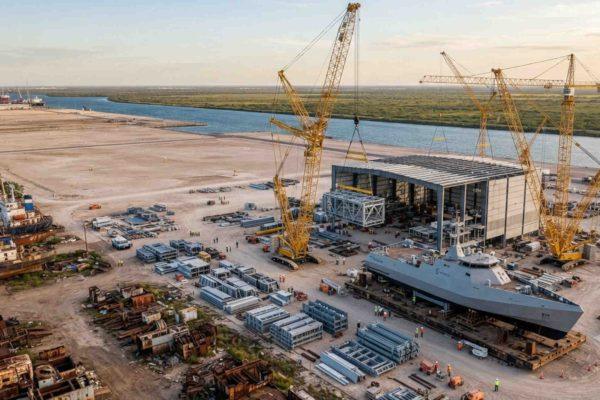
In a bold move to reshape its economic future, Cameron County—one of the poorest regions in the United States—has approved a $211 million tax incentive package to lure Saronic Technologies to the Port of Brownsville. The company plans to build Port Alpha, a next-generation shipyard for autonomous, AI-guided vessels, with a total investment of $3.2 billion. For a community that has long struggled to close the income gap with the rest of Texas, this could be a transformative opportunity.
From Promise to Reality
The timing of this decision couldn't be more dramatic. Just weeks before the county's vote, one of Saronic's autonomous boats successfully executed the first public personnel rescue performed by an unmanned vehicle near the Strait of Hormuz. That milestone gave local officials a powerful talking point: the technology works, and it can save lives in dangerous environments without risking human crews.
Construction is slated to begin in 2026, with operations expected by 2028. County leaders project a $160 billion regional economic impact over the next two decades, but skeptics note that defense and tech industry cycles are notoriously unpredictable. The optimism is real, but so are the risks.
Local Skepticism Runs Deep
Not everyone in Cameron County is celebrating. The 95% tax abatement granted to Saronic has raised eyebrows among residents who see public services already stretched thin. In an area where schools, roads, and healthcare are underfunded, giving up $211 million in tax revenue over twenty years feels like a gamble.
“We’re betting that a tech startup will do for us what oil did for other parts of Texas,” said one local business owner, who asked not to be named. “But what if it doesn’t work out?”
The county is essentially wagering that Saronic’s autonomous shipyard will replicate the economic boom that the oil industry brought to places like Midland and Odessa. But the comparison is imperfect: oil is a proven commodity, while autonomous vessels are still an emerging technology.
What’s at Stake for the Border Region
Cameron County sits at the southern tip of Texas, bordering México, and has long been a hub for trade and logistics. The Port of Brownsville already handles significant cargo, but a high-tech shipyard would diversify the local economy beyond agriculture and traditional manufacturing. The promise of 10,000 jobs—in design, engineering, and production—could be a game-changer for a region where unemployment rates often exceed state averages.
However, the deal also raises questions about accountability. If Saronic fails to deliver on its job creation promises, the county has limited recourse. The tax abatement is structured to incentivize performance, but critics argue that the terms are too generous for a startup with no track record in large-scale manufacturing.
For context, similar incentive packages in other parts of Texas have had mixed results. In Prosper, Texas, a luxury development with a crystal lagoon has fueled smart investments, but not every community has seen the promised returns. Cameron County’s gamble is bigger, and the stakes are higher.
A Broader Economic Context
This decision comes at a time when Texas families are feeling the squeeze from rising costs. The Texas rental market has hit a crisis point, with middle-class families priced out across major cities. Meanwhile, proposals like Gina Hinojosa's $1,500 direct payments aim to provide relief, but they face an uncertain future in the state legislature.
For Cameron County, the Saronic deal represents a bet on the future—one that could either lift the region out of poverty or leave it with empty promises. As cranes rise and hulls roll out, the real test will be whether this high-tech gamble pays off for the people who need it most.