Santa Monica has long been a beacon for tourists and a magnet for regional shoppers, but its commercial corridors are now grappling with an unprecedented retail crisis. More than 11% of the city's commercial space sits vacant, a rate that outpaces neighboring hubs like Beverly Hills, Culver City, and West Hollywood, according to a recent RAND Corporation study. The downtown area, especially the iconic Third Street Promenade, has been hit hardest, with nearly 45% of all vacant spaces clustered there.
The pandemic accelerated a decline that began before 2020, and the city's finances have yet to recover. Retail sales remain nearly a third below pre-pandemic levels, and the City Council declared fiscal hardship in September 2025 after a $229M legal settlement. That settlement stemmed from accusations against a former municipal employee involving child abuse in predominantly Latino neighborhoods, adding a layer of social and economic complexity to the recovery.
A tale of two recoveries
While Santa Monica struggles, its neighbors have bounced back. Beverly Hills, Culver City, and West Hollywood all regained pre-pandemic sales levels by 2021, though they've since seen modest declines. Santa Monica's sales tax collections, which were at 89% of 2015 levels in 2021, have hovered around 60% since early 2026. The contrast is stark, and it underscores the unique challenges facing the coastal city.
The Third Street Promenade, once a bustling pedestrian mall, now has a retail vacancy rate of 31% as of August. The departure of major anchors like Nordstrom has shrunk activity, and apparel and accessory sales have plummeted by 75% since 2015. Food services have also suffered, with a 24% decline over the same period.
City administrator Oliver Chi acknowledges that the city's historical reliance on international tourism left it vulnerable to shifts in consumer behavior and perceptions of safety. "We had to decide whether to manage the decline or confront the moment more actively," Chi said. Public safety concerns have compounded the commercial difficulties, even though violent and property crimes have actually decreased by 12% in 2025 and another 10% in 2026. The RAND report notes that over 70% of thefts and assaults are concentrated in just 5% of the city's territory, but the perception of danger persists.
AJ Sacher, director of operations for Barney's Beanery, a local restaurant, says that businesses still operating face high maintenance and utility costs, and that the city hasn't invested enough in the promenade. He points to social media images of crime and homelessness that have driven away customers, creating an environment that "feels frightening when night falls." The RAND report, however, found no evidence that these issues have worsened to the extent suggested by such perceptions, and the unhoused population has actually declined slightly in 2026.
Turning the tide
Mayor Caroline Torosis says the city is responding with a multi-pronged approach. It has increased foot and bicycle patrols downtown, reduced water and parking fees, streamlined business permits, and police have made over 100 arrests weekly in February and March. The city is also investing $3M to revitalize the Third Street Promenade and has created an entertainment zone between Wilshire Boulevard and Broadway, where visitors can enjoy open alcoholic beverages during concerts and sports viewing events.
Ryan Hawley, a retail brokerage vice president at JLL Los Angeles and board member of Downtown Santa Monica Inc., says negotiations are underway to fill vacant storefronts. He notes that the organization reports 79% of spaces are leased, a figure that differs from RAND's vacancy rate because some properties are advertised despite having temporary tenants. The organization has also seen periodic surges in visitors, including a 26% spike during World Cup events and a 20% bump in August.
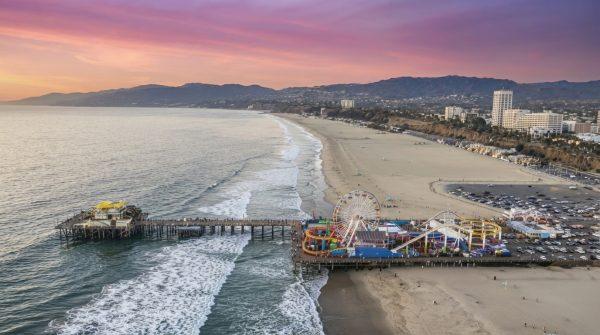
For those with the stomach for risk, Santa Monica's current downturn could be a rare opening. The city's fundamentals—its beaches, its pier, its cultural cachet—remain intact. The iconic pier sign may be heading to Las Vegas for restoration, but the city's appeal endures. As the city invests in new attractions and safety measures, early investors could reap rewards when the tide turns. The question is whether the recovery will come soon enough to save the businesses that have held on this long.