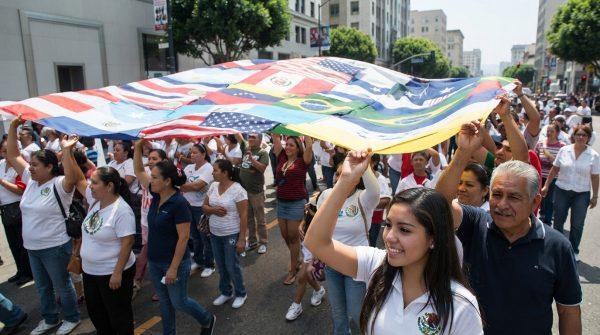
The story of Latinos in the United States is often told through the lens of struggle and stereotype. But a new economic report from the Latino Donor Collaborative paints a far more dynamic picture: a community that is not just participating in the American economy but actively reshaping it.
In 2024, the economic output of US Latinos reached an estimated $4.4 trillion. That figure, if it were a standalone country, would rank as the fourth-largest economy in the world, surpassing the entire national outputs of Japan, India, and the United Kingdom. It's a staggering number that underscores the community's growing financial clout.
Beyond the Stereotypes: A Diverse Economic Engine
For decades, the prevailing image of Latino labor was tied to agriculture and manual work. While those sectors remain important, the data reveals a far more diversified economic footprint. In 2024, agriculture, forestry, fishing, and hunting contributed just $36.7 billion—a mere 0.8% of the total Latino economic output. Instead, the heavy lifters are public administration and manufacturing, each contributing over $540 billion. Real estate, healthcare, and construction follow closely, demonstrating a robust and varied business ecosystem.
This diversification is also reflected in the community's educational and professional trajectory. Among young adults aged 25 to 29, high school completion rates jumped from 61.7% in 2003 to 88.3% in 2024. The share of those holding a bachelor's degree more than doubled, from 10% to 25.2%. Consequently, the proportion of Latinos in management and executive roles climbed from 22.1% in 2014 to 27.6% in 2024. This is not just upward mobility; it's a structural shift into the knowledge economy.
A Young, Growing, and Increasingly Native-Born Population
The community's demographic profile is also changing. Today, roughly 70 million Latinos live in the US, with about 80% holding US citizenship. Crucially, population growth is now driven primarily by births, not immigration. Between 2024 and 2025, the Latino population grew by 1.35 million people, with 1.06 million of that growth coming from local births. In the same period, the non-Latino white population contracted by 736,000.
This youthfulness is a key economic asset. The median age of US Latinos is 31, a full decade younger than the national average. With 28% of the community under 18, the labor force participation rate stands at 69%, and Latinos are contributing nearly two-thirds of the net growth in the national workforce. This demographic weight is not just an economic factor; it's a political one, as debates over the 2030 Census and citizenship pathways for Dreamers and TPS beneficiaries take center stage.
The economic dynamism is most visible in sectors that are often overlooked. Transportation and warehousing grew by 21.3% in the last year, compared to just 4.6% nationally. Finance and insurance expanded by 21.1% versus 10.6% overall, and real estate grew by 20.1% against a national rate of 6.8%. In fact, the Latino economy outpaced the national economy in 14 of the 20 industries analyzed.
This growth is not just about big corporations. It's about the tienda on the corner, the construction firm in Phoenix, the tech startup in Austin. It's about a community that is increasingly defining its own economic destiny, challenging the outdated narratives that have long limited its potential. As the data shows, the future of the American economy is inextricably linked to the success of its Latino population.