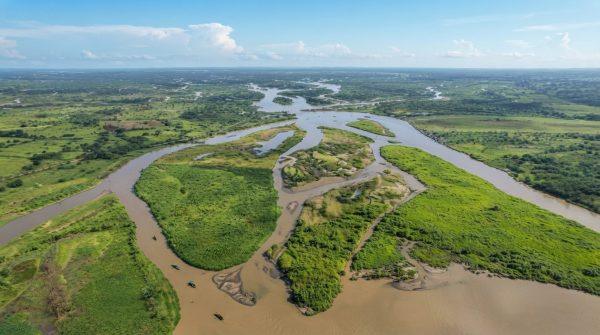
In the lowlands of Sucre, Colombia, a remarkable story of ancient engineering is coming to light. New research published in Communications Earth & Environment shows that pre-Hispanic communities built a vast hydraulic network—spanning some 500 hectares—without the oversight of kings, priests, or any centralized power. Instead, they relied on collective action and a deep understanding of their amphibious environment.
The study, led by archaeologists from the Colombian Institute of Anthropology and History, used detailed satellite imagery to map residential ridges and platforms across the region. What they found challenges long-held assumptions about how complex societies emerge. In the tropical savannas of La Mojana, ancient farmers engineered a landscape that could handle both heavy rains and prolonged droughts—all without metal tools or a ruling elite.
Decentralized engineering, remarkable efficiency
The hydraulic system was designed to manage water flows, storing excess during wet seasons and releasing it during dry spells. The construction of these earthworks was no small feat. Yet the researchers estimate that a single system could be built by just 800 workers in under 60 dry days—a testament to the community's productivity and organization.
This stands in stark contrast to other ancient American civilizations, such as the Maya or the Andean states, which often featured strong central authorities. The absence of grand palaces or royal tombs in La Mojana suggests that power was distributed among households, not concentrated in a single ruler. Even the gold artifacts found in the region, which once led to romanticized notions of powerful chiefs, are now reinterpreted as part of a more egalitarian social fabric.
The mathematical models used in the study also looked at population density and the volume of moved earth. They found that maintaining the system required minimal annual effort, making it sustainable for generations. This kind of ancient Amazonian earthwork research is reshaping our understanding of pre-Columbian societies across the continent.
Lessons for modern water management
La Mojana is no stranger to environmental challenges. Today, the region faces severe floods and seasonal droughts, and modern engineering projects often fail because they disrupt the natural flow of water. Recent infrastructure failures have highlighted the urgent need to rethink water management strategies. Archaeologists argue that we have much to learn from the ancient farmers who thrived in this landscape for centuries.
The agricultural fields of La Mojana were designed to store water without damaging local wetlands. This green engineering was passed down through generations, with families organizing themselves through mutual support. The abandonment of these settlements before the arrival of Spanish colonizers remains a mystery, but the legacy of their ingenuity is clear.
Satellite technology is opening new windows into the social organization of lowland societies, cementing a historical precedent of community self-reliance. As we face our own climate challenges, these ancient solutions offer a powerful reminder that collective action and local knowledge can be as effective as top-down planning.
For Latinos across the Americas, this story is a source of pride—a testament to the sophisticated engineering and social cooperation of our ancestors. It also serves as a call to look to the past for sustainable solutions to today's environmental crises. As researchers continue to explore the region, we can expect more revelations about how these communities thrived without kings or empires.
In a world where infrastructure often fails under climate stress, the ancient Colombians' approach to water management is more relevant than ever. Their story is not just a footnote in history but a blueprint for resilience.