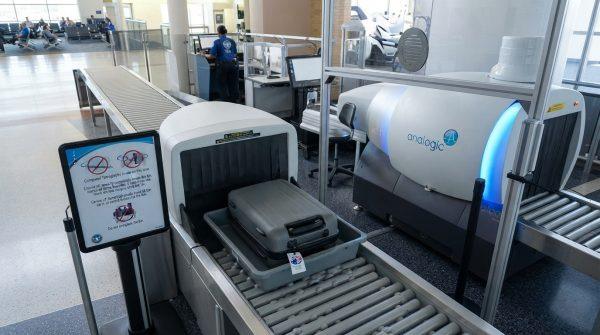
If you're planning to fly this holiday season, you might want to double-check the size of your carry-on. The Transportation Security Administration (TSA) is rolling out new computed tomography (CT) scanners at airports across the United States, and these machines have smaller openings than the older models. That means your trusty suitcase might not fit through, forcing you to check it at the gate—and pay a fee you didn't budget for.
The new scanners are part of a federal effort to modernize airport security. They use 3D imaging to give agents a detailed view of your bag's contents, which means you no longer have to remove your laptop or tablet from your bag. That's a win for convenience, but the trade-off is a stricter size limit. The TSA and participating airlines have set a standard carry-on dimension of 22 inches by 14 inches by 9 inches. If your bag exceeds those limits, the scanner may reject it, and you'll be asked to check it at the gate—often with an extra fee.
What travelers need to know
For many of us, the carry-on is a lifeline—especially when flying to visit family in México, Bogotá, or Santo Domingo. But with these new scanners, that bag might not make it on board. The TSA says the smaller openings are necessary for the machines to work effectively, but consumer advocates are questioning why travelers should pay for a problem created by new equipment.
“It's frustrating,” says María Fernanda, a frequent flyer from Miami who travels to Medellín several times a year. “I've used the same carry-on for years, and now suddenly it's too big? It feels like a money grab.”
The TSA insists the new technology is about safety, not revenue. “These scanners provide enhanced detection capabilities,” said a TSA spokesperson. “They allow us to see inside bags in 3D, which reduces the need for manual searches and speeds up the process.”
But the reality is that many airlines now charge for checked bags, and a gate-check can cost anywhere from $30 to $50, depending on the carrier. For a family of four, that adds up quickly—money that could have been spent on a nice dinner in Lima or a tour of Cartagena.
How to avoid surprise fees
The best strategy is to measure your bag before you leave home. The official dimensions are 22 x 14 x 9 inches, but some airlines may have slightly different limits, so check with your specific carrier. If your bag is close to the limit, consider using a smaller bag or packing less. You can also use the airline's own measuring device at the check-in counter to see if your bag fits.
Another tip: if you're flying on a budget airline like Volaris or Viva Aerobus, be extra careful—they tend to enforce size limits strictly. And if you're connecting through a major hub like DFW or JFK, remember that the same rules apply at every security checkpoint.
Some travelers are also concerned about the environmental impact of more checked bags, as it means more fuel burned and more plastic tags. But for now, the priority is getting through security without a surprise fee.
As the TSA continues to roll out these scanners nationwide, it's wise to stay informed. You can check the official TSA website for updates on your local airport. And if you're planning a trip to see family in Guadalajara or San Juan, give yourself extra time at the airport—and maybe pack a smaller bag.
For more on how security measures are evolving, check out our story on airport-style checks in Washington D.C. And if you're a frequent flyer, you might also want to read about TSA fines for banned devices.
Ultimately, the new scanners are here to stay, and they're part of a broader push to modernize air travel. But that doesn't mean you have to pay extra. Measure your bag, know the rules, and you'll breeze through security—just like a seasoned traveler from Buenos Aires or Ciudad de México.