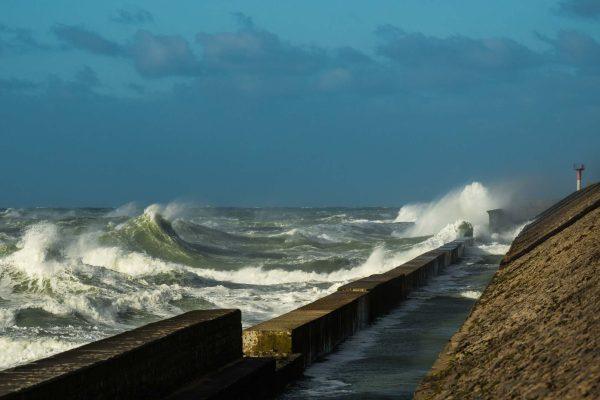
It was a ride that passengers won't soon forget. Along the Southern California coastline, an Amtrak Pacific Surfliner train found itself in the path of the ocean's fury. Bystander footage captured the moment when massive waves, driven by extreme tides and a powerful El Niño, crashed over protective rock barriers and slammed directly into the moving train near San Clemente.
The video, shared widely on social media, shows whitewater completely submerging the tracks just before the locomotive passes. A second surge then hits the side of the train, sending spray high into the air. It's a stark reminder of how vulnerable our coastal infrastructure has become.
El Niño and coastal erosion: a dangerous combination
This incident unfolded during a convergence of extreme high tides and storm-generated swell, fueled by one of the strongest El Niño patterns on record. The same forces have been accelerating coastal erosion across the region, eating away at beaches and undermining protective barriers. In San Clemente, the retreating shoreline has already caused repeated service disruptions on the Pacific Surfliner route, forcing emergency stabilization projects and constant monitoring.
For many in the Latino community, the Pacific Surfliner is more than just a train—it's a lifeline connecting families and cultures from San Diego to Los Angeles and beyond. The route passes through areas with deep Mexican-American roots, and its stunning ocean views have made it a favorite for weekend trips to places like San Juan Capistrano or Oceanside.
But the beauty comes with risk. As sea levels rise and storms intensify, the question isn't if these events will happen again, but how often. The footage from San Clemente is a wake-up call for transportation authorities and urban planners across the West Coast.
Infrastructure under pressure
The Pacific Surfliner corridor is renowned for its breathtaking scenery, but it's also one of the most challenging rail lines to maintain. The combination of steep cliffs, sandy beaches, and relentless wave action makes it particularly susceptible to erosion. In recent years, emergency rock placements, track realignments, and even temporary closures have become routine.
Experts say that long-term solutions will require massive investment. Options include building more robust sea walls, elevating tracks, or even relocating the line further inland. Each comes with its own set of environmental and economic trade-offs.
For now, passengers and crew are left to navigate the unpredictability of the Pacific. The video from San Clemente serves as a powerful visual of what's at stake. It's a scene that resonates beyond California, echoing the challenges faced by coastal communities from Florida's Atlantic coast to the shores of Latin America.
As climate change continues to reshape our world, stories like this remind us that the impacts are not distant—they're happening right now, on our daily commutes and weekend getaways. The question is how we respond.