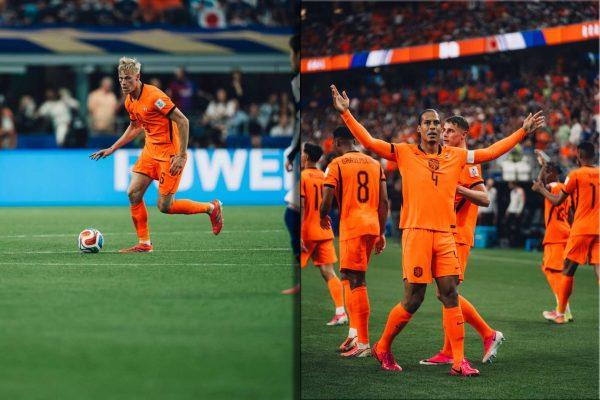
As the world looks toward the 2026 FIFA World Cup, co-hosted by México, the United States, and Canada, it's worth revisiting one of football's most enduring narratives: the Netherlands, the greatest team to never win the sport's ultimate prize. For a nation of just over 18 million people, the Oranje have punched far above their weight, producing seven Ballon d'Or winners and five world-class generations that have reshaped how the game is played.
From the streets of Ámsterdam to the pitches of Rotterdam, Dutch football culture has always been about innovation. The 1970s squad, led by the visionary Johan Cruyff, introduced total football—a fluid system where players swapped positions seamlessly, confusing opponents and delighting purists. That team reached back-to-back World Cup finals in 1974 and 1978, only to fall to West Germany and Argentina, respectively. Yet their influence on modern tactics is unmatched; even today, coaches from Barcelona to Buenos Aires study their methods.
A Legacy of Heartbreak and Excellence
The pattern of falling just short continued into the 1980s and beyond. The generation of Ruud Gullit, Frank Rijkaard, and Marco van Basten won Euro 1988 in style, with Van Basten's iconic volley against the Soviet Union still replayed in highlights. But at the World Cup, they couldn't replicate that magic. The 1998 squad, featuring the genius of Dennis Bergkamp and the leadership of Edgar Davids, reached the semifinals in France, only to lose on penalties to Brazil. In 2010, the Oranje made it to the final in South Africa, where Andrés Iniesta's extra-time goal for Spain broke Dutch hearts once more.
No other men's national team has reached more World Cup semifinals (five) or finals (three) without winning the tournament. This statistic alone cements their status as the ultimate nearly-men, but it also speaks to their consistency. Even in 2014, under Louis van Gaal, the Netherlands finished third in Brazil, beating the host nation 3-0 in the third-place match. The women's team has mirrored this trajectory, winning Euro 2017 but losing the 2019 World Cup final to the United States.
For Latino fans, the Dutch story resonates deeply. Like Argentina before 1978 or México's persistent quarterfinal exits, the Oranje embody the tension between brilliance and fate. Their matches against Latin American sides have produced some of the tournament's most memorable moments: the 1998 quarterfinal against Argentina, where Bergkamp's last-minute goal remains a masterpiece of control and precision, or the 2010 final against Spain, which felt like a clash of footballing philosophies.
Other nations share this narrative of near misses. The legendary Hungarian team of 1954, led by Ferenc Puskás, crushed West Germany 8-3 in the group stage only to lose the final 3-2. Sweden, runners-up in 1958, and Croatia, finalists in 2018 under Luka Modrić, also know the pain of coming close. Portugal, with Eusébio in 1966 and Cristiano Ronaldo in later years, reached the semifinals but never the final. Yet none have the depth of near-misses that the Netherlands do.
As the 2026 World Cup approaches, with matches set for iconic venues like the Estadio Azteca in México City and the MetLife Stadium in New Jersey, the Dutch will once again be contenders. Their current generation, featuring talents like Frenkie de Jong and Memphis Depay, carries the weight of history. Whether they can finally break the curse remains to be seen, but their place in football's pantheon is secure.
For those interested in the broader context of World Cup history, check out our piece on World Cup Legends: The 15 Players Who Defined Soccer History. And for a look at the tournament's cultural impact, see Shakira's World Cup Journey: From 'Waka Waka' to Halftime History.