The dream of attending the 2026 World Cup is turning into a financial nightmare for many Latino families across the United States. As the tournament approaches, the secondary ticket resale market has become a minefield of speculative scams, technical glitches, and zero accountability—leaving households that pooled their savings for months with empty pockets and broken plans.
Multiple families who carefully budgeted for match tickets are now facing last-minute order cancellations or invalid barcodes at stadium gates. The problem is especially acute for Spanish-speaking fans, who encounter a total lack of official communications in their language. This void pushes many toward informal channels like WhatsApp and Facebook, where predatory sellers thrive on trust and urgency.
How the Scam Works
The official FIFA marketplace imposes a mandatory 30% surcharge on ticket listings, making it prohibitively expensive for working-class families. Desperate for affordable options, buyers turn to third-party platforms like StubHub, unaware that these sites offer weak legal protections against speculative brokers. When a QR code fails to transfer or a ticket is suddenly canceled, the buyer is trapped in a blurry chain of accountability between the resale platform and event organizers.
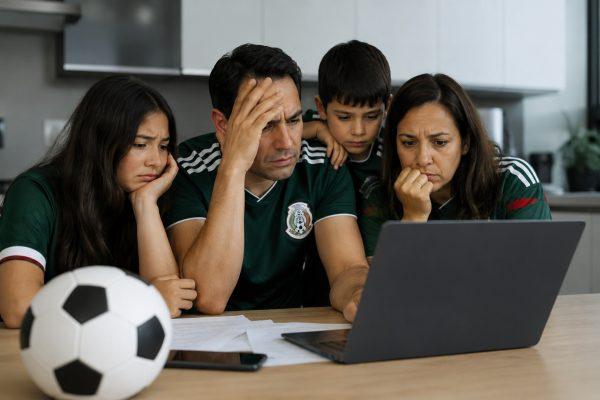
“We saved for a year—my parents, my tíos, everyone chipped in,” said a Mexican American father from Los Angeles, who asked to remain anonymous. “At the gate, the barcode didn’t work. We were told to contact StubHub, but they said it was FIFA’s problem. No one helped us in Spanish.”
Reported losses range from a few hundred dollars to over $5,000 per family. In one case, a multigenerational group from Chicago lost $8,000 after purchasing tickets through a Facebook group that promised discounts. The seller disappeared after payment.
The Human Toll
Behind the cold statistics are heartbreaking stories. A grandmother in Houston bought tickets as a graduation gift for her grandson, only to have the order canceled two days before the match. A family from New York flew to México for a group stage game, only to find their seats occupied by other fans who had bought the same tickets from a different broker.
These experiences are not isolated. Consumer advocates warn that the secondary market for the 2026 World Cup is uniquely dangerous because of the tournament’s scale across three countries—Estados Unidos, México, and Canadá—and the lack of coordinated consumer protection. For Latino families, the risks are compounded by the financial pressures of dual-income households and the cultural importance of attending a global event that celebrates their heritage.
What Can Be Done
Experts stress that the only safe way to buy tickets is through the official FIFA portal, despite the higher price. “That 30% surcharge is essentially insurance,” said a consumer rights lawyer in Miami. “It guarantees you get in and that there’s a company you can hold accountable.”
For those who have already been scammed, immediate steps include filing reports with local police, the Federal Trade Commission, and the consulate of their country of origin. Community organizations are also pushing for better Spanish-language support from ticketing platforms.
The 2026 World Cup should be a celebration of fútbol and Latino culture, not a source of financial ruin. As the tournament draws closer, families are urged to verify every transaction, avoid social media listings, and demand clear communication in their language. No dream is worth losing your savings over.