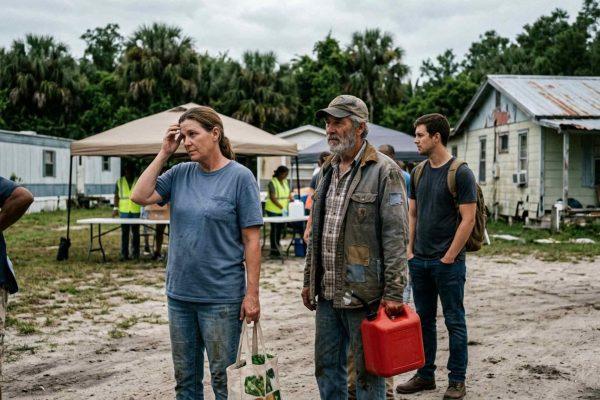
In Flagler County, Florida, a quiet crisis is unfolding. Nearly half of all households—44 percent, according to data from United For ALICE—are unable to cover the cost of basic living expenses. These are working families, many of them Latino, who show up to jobs every day but still find themselves choosing between paying the electric bill or buying groceries.
United For ALICE, a research organization that tracks financial hardship, defines these households as ALICE—Asset Limited, Income Constrained, Employed. They earn too much to qualify for most government assistance, yet too little to absorb even minor financial shocks. A car repair, a medical bill, or a spike in summer cooling costs can push them over the edge.
A holiday lifeline for Flagler families
To address this growing need, the nonprofit Flagler Cares has launched its third annual Keep the Holiday Lights On campaign. The goal is simple: recruit 100 sponsors to donate $100 each, which will cover essential electricity and water bills for vulnerable households through December. Organizers hope the community will step up to keep families stable during the holiday season.
“This is about more than just paying a bill,” said Carrie Baird, executive director of Flagler Cares. “It’s about giving hardworking neighbors peace of mind during a time that should be about family and togetherness.”
For many in Flagler County, the threat of disconnection is real. Utility rates have climbed alongside inflation, and wages haven’t kept pace. The county, which includes the city of Palm Coast, has seen an influx of new residents in recent years, but the cost of living has risen faster than local incomes.
Who is affected?
The ALICE framework paints a stark picture: these are not unemployed individuals, but people who are fully employed in the regional economy—in retail, hospitality, construction, and healthcare. Many are Latino families who have long been the backbone of Florida’s service industry. They work hard, but their earnings barely cover rent, food, and utilities.
“I’ve seen families who are one unexpected expense away from losing everything,” said a local community organizer who works with Flagler Cares. “A $100 donation might not sound like much, but for a family facing a shutoff notice, it can mean the difference between staying warm and being left in the dark.”
How to get help or give
Starting December 1, families experiencing financial hardship can apply for assistance through Flagler Cares’ online portal. Applications will be reviewed on a first-come, first-served basis until funds run out. In addition to direct bill payments, eligible participants will have access to financial coaching designed to help them build long-term stability.
For those who want to contribute, donations can be made online or by mail until December 31. The campaign’s name, Keep the Holiday Lights On, is a reminder that for many, the holidays are not just about decorations—they’re about keeping the basics running.
Flagler County’s struggles are not unique. Across Florida, communities are grappling with the same pressures. In nearby areas, property tax breaks could drive up rents, and rising sea levels are reshaping coastal life. But for now, the focus is on the immediate need: keeping the lights on for families who are doing everything right but still falling behind.
As the holiday season approaches, Flagler Cares is betting on the generosity of neighbors. For many, it’s a chance to make a real difference in the lives of those who are often invisible—the working poor who keep our communities running.