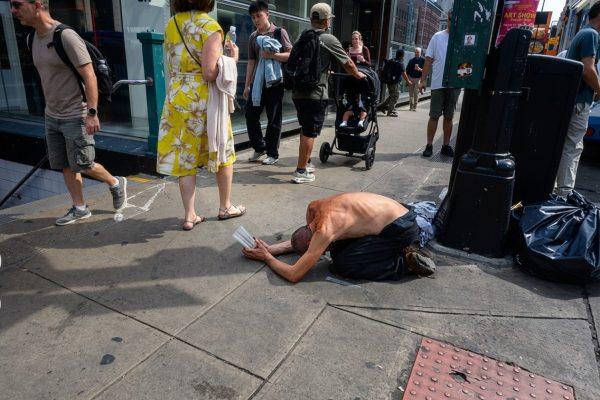
On the corner of Third Avenue and East 89th Street, a quiet stretch of Manhattan's Upper East Side has become the epicenter of a heated debate over homelessness, housing policy, and class privilege. The city's proposal to convert two buildings at 1587 and 1585 Third Avenue into a shelter for 80 adult men—some with substance abuse and mental health challenges—has sparked outrage among residents, business owners, and parents who say the plan was rolled out without meaningful community input.
The location is emblematic of the tensions at play. It sits in one of the densest residential corridors in Manhattan, surrounded by liquor stores, wine shops, dispensaries, an Equinox gym, a Whole Foods, and just blocks from The Dalton School, an elite private institution where tuition runs $67,000 a year. For many neighbors, the shelter feels like an intrusion into a carefully curated urban ecosystem. But for city officials, it's a necessary step to address a homelessness crisis that has only deepened in recent years.
A Neighborhood Divided
Longtime resident Heidi Berger, who has lived in The Monarch condominium directly across from the proposed site since 1987, is among the most vocal critics. “We're not against helping people,” she told local media. “But this location is completely inappropriate. It's already congested, and there are schools nearby. We deserve transparency and a real conversation about where these facilities go.”
Berger's sentiment echoes across the neighborhood. A Change.org petition launched by the Yorkville Neighborhood Association surpassed 10,000 signatures in less than 72 hours, a record for civic participation in the area. Critics argue that the shelter will bring crime, strain public services, and reduce foot traffic for local businesses already struggling with post-pandemic recovery. Real estate records show a dip in buyer interest within the zip code this summer, prompting investors to reassess their portfolios along Third Avenue.
But city officials and housing advocates see a different story. They point to a nationwide pattern where affluent neighborhoods resist housing for the poor, often under the guise of safety concerns. Council member Zohran Mamdani and Speaker Julie Menin have defended the project as part of the city's mandate to provide emergency housing. “We cannot solve homelessness by hiding it in less visible neighborhoods,” Mamdani said in a statement. “Every community must do its part.”
The debate is not unique to New York. Across the United States, cities are grappling with similar conflicts between municipal housing mandates and local property values. In California, transit-oriented housing reforms aim to add a million homes, but face similar NIMBY opposition. The Upper East Side controversy is a microcosm of a larger struggle over who gets to live where—and who gets to decide.
Legal and Political Fallout
The opposition has moved beyond petitions. Environmental lawyers are exploring potential lawsuits over hazardous waste management at the site, while community leaders are planning class-action suits arguing violations of zoning laws. Protesters recall a similar battle on First Avenue near 61st Street, where courts evaluated comparable complaints. The outcome of this case could set a precedent for urban development and real estate valuation across Manhattan.
Meanwhile, the city is accelerating bureaucratic procedures, which only fuels frustration among residents who feel ignored. Tenant associations have joined the protests, fearing a saturation of public services and increased nighttime insecurity. Merchants worry about losing clientele, even as official spokespersons insist the project will meet all safety standards.
For Latino families in New York and beyond, this story resonates on multiple levels. Many Latinos in the city live in neighborhoods that have long shouldered the burden of housing the homeless, while wealthier enclaves resist. The debate also touches on broader issues of economic mobility and the American dream—themes explored in our coverage of how Latino families are redefining the American reality. As housing costs soar, the question of who gets to call a neighborhood home becomes ever more urgent.
The controversy is far from over. With legislative elections approaching, the shelter plan has become a polarizing issue that could influence voter turnout on the East Side. The city's response—and the courts' eventual rulings—will shape how New York balances emergency housing needs with community concerns for years to come.
For now, the battle lines are drawn. On one side, residents who feel their quality of life is under threat. On the other, advocates who see the shelter as a test of the city's commitment to equity. And in the middle, the 80 men who simply need a place to sleep.