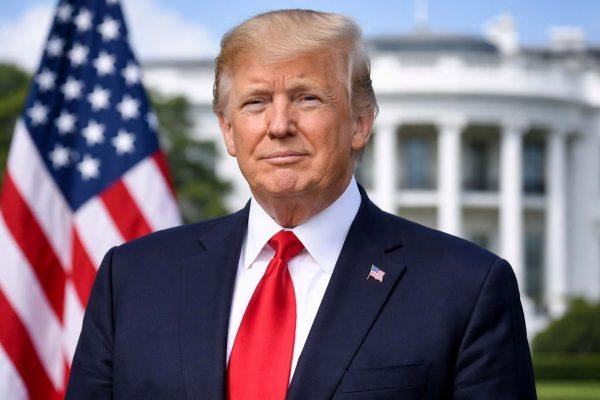
Donald Trump's hair has been a topic of fascination for as long as he's been in the public eye—from his days building towers in New York to his time in the White House. This week, a fuller, brighter look in Las Vegas reignited the eternal question: is it real?
On August 5, Trump appeared with noticeably more volume and a different blond tone than in recent outings. The internet, as it does, went into overdrive with wig theories and makeup speculation. But by the next day, his hair seemed back to its usual thinner style, reminding us that hair can change with humidity, lighting, and styling products.
The evidence for real hair
Trump has spent years insisting his hair is his own. In 2010, on Ryan Seacrest's radio show, he let a co-host touch it, saying it might not be beautiful, but it was his. A year later, he rejected the term "comb-over," describing his technique as moving his hair "a little bit forward and back."
The most famous test came in 2016 on The Tonight Show. Jimmy Fallon asked if he could mess up Trump's hair on camera. Trump agreed, and Fallon ran his hand through it, disrupting the carefully arranged style and briefly exposing more scalp. While it didn't prove anything about past procedures, it was strong evidence that what we see isn't a conventional removable toupee.
The styling secret
Trump has explained his routine: he washes it, lets it air-dry for about an hour, then combs it into place. He's long rejected the "comb-over" label, but stylists note that long sections are strategically arranged to cover thinning areas. Vanity Fair once joked it resembled a "double comb-over," with hair crossing from multiple directions.
His longtime barber, Adrian Wood, who cut Trump's hair for about 20 years, offered the clearest explanation. Wood said Trump was extremely particular about how much was trimmed, mainly cutting around the perimeter while Trump handled the top himself. Wood also admitted that covering Trump's bald spot required considerable effort.
So the volume isn't necessarily a wig—it's likely the product of strategically long hair, careful positioning, and styling to cover thinning.
Has he had work done?
Here's where certainty fades. For decades, books and media have repeated claims that Trump underwent a scalp-reduction procedure in the late 1980s. A scalp reduction removes part of a bald section and repositions hair-bearing skin. Trump has denied these reports, and there's no independently verified public record of such a procedure.
What is documented: Trump's former barber discussed thinning and a bald spot, and his longtime physician said Trump used finasteride (Propecia), a medication to slow hair loss. That's a far cry from surgery, but it does suggest he's been managing hair loss medically.
Why does it look different sometimes?
This week's Las Vegas appearance is a perfect example. The sudden volume and different tone could be explained by blow-drying, hairspray, humidity, or even a new toner. Hair professionals have noted that Trump's sometimes yellow, white, or strawberry tones could come from toners used on blond or gray hair—a professional theory, not confirmation of his personal routine.
So, is Trump's hair real? Based on public evidence, the answer leans heavily toward yes. He's let people touch it, Fallon messed it up on live TV, his barber has described cutting it, and Trump himself has explained his styling for decades. What we can't establish from public evidence is whether he's had any cosmetic procedures—but that's a private matter.
For a man who's built his brand on image, his hair remains a signature—and a mystery that keeps us guessing. And in a world where even makeup artists can transform a look, it's no wonder we're curious.