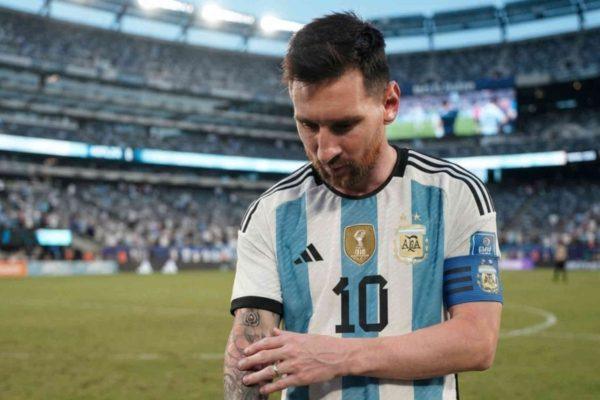
Lionel Messi, the Argentine football icon, carries more than just trophies and records—his skin is a living canvas of his journey. With at least fifteen visible tattoos, each piece of ink tells a story of family, faith, and the sport that made him a global legend. For fans across Latin America and the diaspora, these designs offer a glimpse into the man behind the number 10.
Family First: Tributes to Antonela and His Children
Messi's tattoos are deeply personal, with many dedicated to his wife, Antonela Roccuzzo. A crown on his biceps matches one she wears, symbolizing their bond. He also has a realistic eye inked on his skin, a constant reminder of her presence. On his left calf, the handprints of his son Thiago are etched, along with the names and birthdates of his entire immediate family. These details show that for Messi, family is the anchor of his life.
His love for his roots in Rosario, Santa Fe, is also immortalized. A rosary on his right arm pays homage to his hometown, while the stained-glass rose window of Barcelona's Sagrada Familia basilica honors his golden years with FC Barcelona. This blend of Argentine and Catalan symbols reflects his dual identity—a boy from Rosario who conquered Europe.
Faith, Resilience, and the Lotus Flower
Beyond family, Messi's tattoos speak to his resilience. A lotus flower, a symbol of purity emerging from chaos, represents his ability to overcome obstacles. This is a nod to his journey from a boy diagnosed with growth hormone deficiency to a World Cup champion. The flower is a quiet reminder that greatness often rises from struggle.
His faith is also present. The rosary is not just a tribute to Rosario but a symbol of his Catholic upbringing. For many Latinos, faith is a cornerstone of identity, and Messi's ink reflects that cultural thread.
Football and Time: The Number 10 and the Clock
Messi's devotion to football is etched into his skin. An antique clock on his forearm is set at 10:10, a tribute to his iconic jersey number. The clock, surrounded by mechanical gears, symbolizes the value of time and the moments that defined his career. On his left leg, a soccer ball and the number 10 reaffirm his lifelong passion. These tattoos are not just decorative—they are a testament to the sport that transformed his destiny.
For fans, these details add depth to his legacy. As his final match with Inter Miami approaches, his tattoos serve as a permanent record of a journey that began in Rosario and reached the world stage.
Messi's ink also connects to broader narratives in Latino culture. His story echoes the sacrifices made by families like his own, as highlighted in the role of his mother, Celia Cuccittini. And his World Cup victory, which included moments like discovering a cheat sheet on an opponent's water bottle, is part of the lore that his tattoos commemorate.
In the end, Messi's tattoos are more than ink—they are a biography. For Latinos who see themselves in his story, they are a reminder that identity is carried not just in the heart, but on the skin.