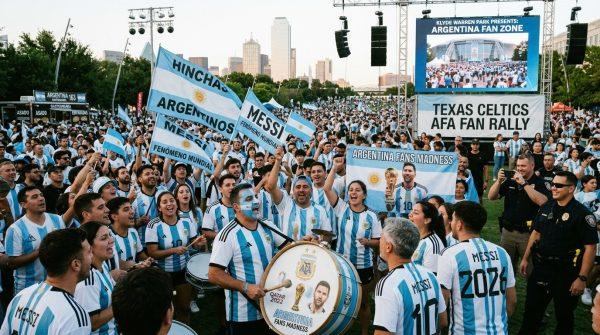
In the working-class neighborhoods of Rosario, Argentina, a quiet force shaped the destiny of football's greatest icon. While the world marvels at Lionel Messi's artistry on the pitch, the foundation of his success was laid by his mother, Celia María Cuccittini, whose hands worked in cleaning and manufacturing to keep her son's dream alive.
Born in 1960, Celia was the emotional and logistical anchor of the Messi household. While Jorge Messi supervised at a steel plant, Celia took on part-time domestic cleaning contracts and shifts in a magnet factory. These weren't glamorous jobs—they were the gritty, repetitive labor that sustained a family and allowed a young boy to chase a ball in the dusty fields of Rosario.
From Factory Floors to Global Glory
Celia's story is not unique in Latin America, where countless mothers juggle multiple roles to support their children's ambitions. But her impact on Messi is deeply personal. The Argentine captain carries a permanent tribute on his back: a portrait tattoo of his mother's face, a daily reminder of her sacrifices. This bond was forged in the small moments—the meals prepared, the rides to practice, the quiet encouragement after a tough loss.
In 2018, Celia gave a rare interview to international media, revealing the psychological weight her son carried. She spoke of his relentless drive to win the World Cup for Argentina, a mission fueled by the same tenacity she modeled during his childhood. “He wanted it for the people, for his country,” she said, offering a glimpse into the private struggles of a public icon.
Today, as Messi continues to rewrite history—recently surpassing Miroslav Klose as the all-time leading scorer in World Cup tournaments—his mother remains a central figure in his life. She has transitioned from factory worker to executive matriarch, managing aspects of his career and providing the emotional stability that has defined his journey.
Messi's current campaign with Inter Miami in Major League Soccer has brought new challenges, including tactical adjustments with teammates like Vozinha and Casemiro. Yet, his mother's influence remains a constant. Her story is a testament to the power of maternal sacrifice in breaking systemic barriers, a narrative familiar to many in the Latino diaspora.
As Argentina pushes toward the semifinals of the 2026 World Cup, with minimal suspension risks, the team's discipline reflects the values instilled by families like the Messis. Celia Cuccittini's journey from a cleaner in Rosario to the matriarch of football's most influential family is more than a biography—it's a blueprint for resilience.
Her legacy is not just in the trophies or records, but in the quiet dignity of a mother who believed in her son's dream when few others could see it. For every Latino family that has sacrificed for a child's future, Celia's story resonates as a powerful reminder that greatness often begins at home.