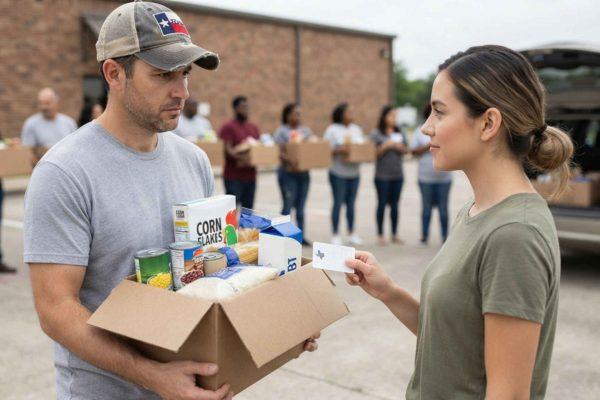
For millions of Texas households, the monthly grocery run is more than a routine errand—it's a lifeline. But that lifeline is now tangled in a knot of federal red tape that could cost the state a staggering $826 million a year. Starting in October 2026 and 2027, new federal rules will shift a larger share of administrative and benefit costs onto state budgets, and Texas, with its payment error rate hovering around 9%, is staring down a financial cliff.
The change hits at a moment when food banks across the state are already stretched thin, and Latino families—who make up a significant portion of SNAP recipients—are feeling the squeeze. From the colonias of the Rio Grande Valley to the barrios of Houston and Dallas, the threat of reduced benefits or longer lines at food pantries is a daily concern.
What's behind the $826 million tab?
The federal government has long covered most SNAP administrative costs, but the new rules tie a larger share of those costs to a state's payment error rate. If a state exceeds 6% in errors—whether from overpayments, underpayments, or bureaucratic delays—it faces penalties. Texas's error rate, driven in part by the complexity of verifying income changes for a large, mobile population, puts it squarely in the crosshairs.
State officials estimate that penalties and increased administrative fees will total $826 million annually. That's money that could otherwise go to food assistance or other essential services. For context, that's more than the annual budget of some small cities.
Advocates are quick to point out that errors are not fraud. "The vast majority of mistakes come from paperwork delays or changes in work hours that aren't reported in time," says a policy expert at Feeding Texas. "These are not people trying to game the system." Indeed, fewer than 0.1% of Texas households commit intentional fraud, yet the state faces harsh sanctions for exceeding the federal cap.
Ripple effects on Latino communities
The impact would be felt most acutely in Latino neighborhoods, where SNAP participation rates are high. In cities like San Antonio, El Paso, and Laredo, many families rely on SNAP to supplement their grocery budgets. A reduction in benefits or a tightening of eligibility could push more people to already-overwhelmed food banks.
"We're already seeing record demand," says a volunteer at the San Antonio Food Bank. "If SNAP cuts happen, we'll be scrambling to keep up." The pressure on food banks is a direct consequence of rising grocery prices and stagnant wages, and any additional strain could break the system.
Can Texas avoid the penalties?
The Texas Health and Human Services Commission is trying to get ahead of the problem. They've started rolling out technological upgrades and additional training for caseworkers to reduce errors. But critics warn that implementing these changes across a state as vast as Texas takes time—time that is running out before the October 2027 deadline.
"You can't just flip a switch," says a former state employee familiar with the SNAP system. "The infrastructure is outdated, and the caseload is enormous." The commission's efforts may help, but they may not be enough to bring the error rate below 6% in time.
Meanwhile, state lawmakers face a tough choice: divert funds from other programs to cover the penalties, or negotiate with federal officials for an extension. Some have floated the idea of suing the federal government, but that's a long shot.
The stakes are high. As the Texas Head Start changes show, state and federal policy shifts can have outsized effects on immigrant and Latino families. And with infrastructure projects also vying for state funds, the budget squeeze is real.
For now, community organizations are mobilizing. They're urging residents to report any changes in income promptly and to seek help from caseworkers. They're also lobbying state officials to prioritize food security over other expenditures.
"This is about basic human dignity," says María González, an organizer with a Latino advocacy group in Houston. "No one should have to choose between paying rent and buying food."
The coming months will be critical. If Texas can't lower its error rate, the $826 million tab will come due, and the consequences will ripple through every corner of the state. The decisions made in Austin and Washington will shape the future of food security for millions of Texans, many of them Latino.