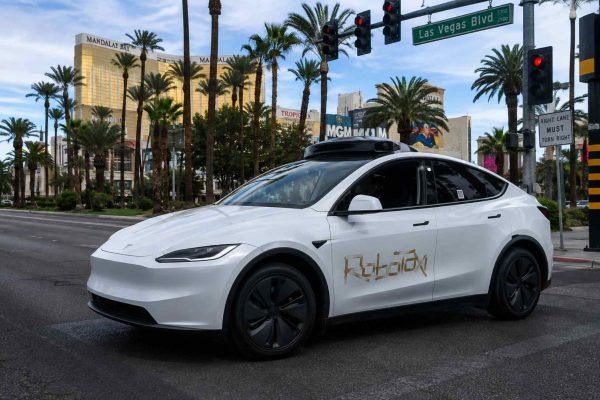
Las Vegas is about to see a very small fleet of Tesla robotaxis on its famous Strip, but don't expect to hail one for a flight to the airport just yet. The Nevada Transportation Authority has granted the electric vehicle maker a provisional commercial permit to operate just ten autonomous taxis, a far cry from the five thousand vehicles the company had originally requested.
The approval comes with a long list of strings attached. The robotaxis are confined to an approved corridor along the Strip, and their top speed is capped at 45 miles per hour. More notably for travelers, the permit explicitly prohibits pickups within 400 meters of Harry Reid International Airport unless airport operators and municipal authorities give the green light. That means catching a ride to your terminal is off the table for now, a decision that keeps the airport's busy curbside traffic firmly under human control.
Human oversight remains non-negotiable
Unlike Tesla's driverless operations in Austin, where vehicles run without safety drivers, Nevada regulators are demanding a more cautious approach. According to automotive engineering standards cited by the state, every passenger trip must have adequate human supervision. Passengers also have to be clearly informed they're riding in an autonomous vehicle, and all fleet units must display prominent “Robotaxi” branding.
State transportation officials describe these initial permits as a trial framework. A formal hearing is scheduled to determine whether Tesla can eventually expand toward its ambitious target fleet size. For now, the company's footprint in Las Vegas is deliberately modest, a testing ground rather than a full-scale rollout.
This cautious stance echoes the regulatory path taken with other autonomous operators. Amazon's Zoox, for instance, has been running test vehicles along the Strip since 2025 and recently secured approval to expand its local fleet to 100 cars and begin charging commercial fares. Nevada officials appear to be using Zoox's phased deployment as a template for evaluating Tesla, keeping the initial number of vehicles low until safety metrics are fully verified.
Local friction and big investments
The approval process hasn't been entirely smooth. Clark County officials, who manage local traffic, emergency response, and municipal licensing, have expressed frustration over not having a direct vote on permit terms. This interagency friction highlights the growing pains of integrating autonomous vehicles into a city that thrives on spectacle and tourism.
Despite the regulatory hurdles, Tesla is doubling down on its Las Vegas presence. The company is investing $3.1 million to remodel a 37,000-square-foot support facility in the southwest part of the valley. This vertical integration—manufacturing the vehicles, programming the self-driving software, and managing fleet logistics under one roof—gives Tesla a level of control that few competitors can match.
For locals and visitors alike, the arrival of robotaxis on the Strip is a glimpse into a future that's arriving in fits and starts. The city, known for its bold bets, is taking a measured approach with this one. As Las Vegas ranks among the rudest U.S. cities, perhaps a driverless car with no human to honk at is a welcome change. But for now, the only way to get to Harry Reid International is still with a human at the wheel.
Meanwhile, the city continues to embrace innovation in other areas, from Elton John's hologram residency to the Indiana Fever's historic win. The robotaxi rollout is just another chapter in Las Vegas's ever-evolving story, one that blends technology with the city's unique brand of entertainment.
As the trial period unfolds, all eyes will be on how these ten robotaxis perform on the Strip's chaotic streets. If they prove safe and reliable, the road to a larger fleet may open. But for now, the message from Nevada is clear: proceed with caution, and keep the airport out of it.