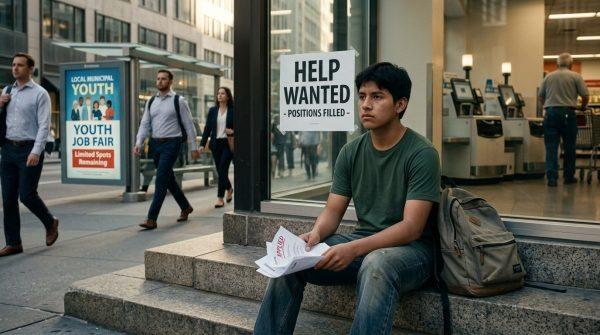
For generations, a summer job was a rite of passage for teenagers across the United States. But that tradition is fading fast. According to the U.S. Bureau of Labor Statistics, this year marks one of the toughest hiring seasons for young people in decades. Only about one in three teens aged 16 to 19 will land a summer position, a sharp drop from the nearly 60 percent who worked during the late 1970s.
The numbers are stark: the proportion of employed youth has fallen from roughly 60 percent in the late 1970s to just 33 percent today. That shift means thousands of students are missing out on an average of $1,500 in summer income—money that often helps cover school supplies, college savings, or family expenses.
Why Are Teen Jobs Disappearing?
Several factors are driving this decline. Adult workers, squeezed by inflation and a tight economy, are increasingly taking entry-level roles that once went to teens. Self-service kiosks and automation have also eliminated many traditional starter jobs in restaurants and retail. Industry projections suggest only about 790,000 new jobs will be created during the hottest months, one of the lowest totals in recent years.
For Latino youth, the situation is even more dire. The unemployment rate for Latino teens more than doubles that of their white peers. This gap stems from a lack of professional networks, fewer local businesses in many communities, and historical barriers to entry. In low-income Latino households, the loss of that summer paycheck hits especially hard—forcing parents to stretch budgets further for basics like food and school supplies.
As we reported in our analysis of hiring shifts, remote work and changing job requirements have also made it harder for young people to gain a foothold. The summer job crisis is part of a broader trend that affects not just income, but the first steps toward a career.
What Can Families Do?
Experts suggest a few strategies to cope with the shortage. Start early and cast a wide net—small businesses, community organizations, and local markets often hire later than big chains. Check municipal and school district websites for youth employment programs. And consider independent services like babysitting, elder care, or yard work, which can provide both income and a verifiable work history.
For families in New York, there are some resources available. The $120 grocery benefit for Latino families can help ease the strain on household budgets during the summer months. Similarly, staying safe during heat waves is a priority for communities where many teens might otherwise be working outdoors.
The loss of summer jobs is not just an economic statistic—it's a blow to the financial stability of working-class families, especially in Latino communities. As the Department of Labor notes, these early work experiences are crucial for building skills and confidence. Without them, the path to economic independence becomes steeper.
Still, there is room for resilience. Many young Latinos are turning to entrepreneurship, freelancing, and community-based work to fill the gap. The summer job may be vanishing, but the drive to earn and learn is not.