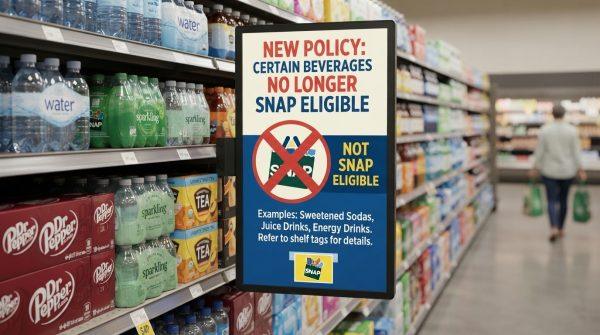
For millions of families across the United States, the Supplemental Nutrition Assistance Program (SNAP) is a lifeline. But recent federal policy changes—pushed by the Trump administration and implemented by the Department of Agriculture—are now reshaping what those benefits can buy. The new rules restrict the use of EBT cards for sugary beverages, a move aimed at curbing obesity and type 2 diabetes. Early data shows a significant drop in soda purchases, but a less visible consequence is emerging: a sharp rise in the stigma felt by beneficiaries at the checkout line.
Researchers from the University of Chicago and MIT have documented a 12% reduction in soda acquisitions through SNAP benefits. Stanford University reports that households cut their purchases by an average of 34 cans per person in recent months. These numbers suggest the policy is changing behavior, but experts caution that the full picture is more complex.
A shift in the shopping cart
For Latino families, who make up a significant share of SNAP recipients in states like Texas, California, and Florida, the new rules mean rethinking weekly shopping lists. Instead of grabbing a two-liter of Coke or a pack of Jarritos, many are turning to water, unsweetened teas, or homemade aguas frescas. That shift aligns with public health goals, but it also comes with trade-offs.
“We’re seeing families adjust their budgets toward more nutritious options,” says Hunt Allcott, a researcher at Stanford who has studied the policy’s effects. “But the savings in health care costs—projected at $1.2 billion annually—don’t account for the social cost of being singled out at the register.”
The policy’s design is straightforward: certain high-sugar drinks are no longer eligible for purchase with EBT cards. But for many beneficiaries, the change feels less like a health initiative and more like a judgment on their choices. “When you’re already struggling to make ends meet, having a cashier tell you that your card won’t cover a soda is humiliating,” says Gina Plata-Nino, director of the Food Research and Action Center’s SNAP program. “It’s a public reminder that you’re on assistance.”
The stigma problem
That stigma is not just an emotional burden—it has practical consequences. Advocates warn that fear of being judged is discouraging eligible families from applying for or using SNAP benefits. In Latino communities, where pride and self-reliance are deeply valued, the shame can be even more acute. “People would rather skip a meal than face the embarrassment of being watched in line,” says Plata-Nino.
This dynamic is particularly concerning in states with large Latino populations. In Texas, for example, recent changes to Head Start enrollment have already created barriers for immigrant families, and the added stigma around SNAP could push more families away from essential support. Similarly, Florida’s restrictions on cash assistance purchases have set a precedent for limiting what benefits can buy, and now SNAP is following suit.
The psychological toll is real. A study from the University of Chicago found that beneficiaries who experienced stigma were 20% more likely to report food insecurity, even when their benefits were sufficient. “The policy is creating a two-tier system,” says Allcott. “Those who can afford to buy healthier options do so willingly; those who rely on SNAP are forced to, and they feel the weight of that every time they shop.”
Balancing health and dignity
Public health experts acknowledge that reducing sugary drink consumption is a worthy goal, especially given the high rates of diabetes and obesity in Latino communities. But they argue that the policy’s success depends on how it’s implemented. “We can’t just restrict purchases and call it a day,” says Plata-Nino. “We need to pair these limits with education and support that respects people’s dignity.”
Some local organizations are stepping in to fill that gap. In California, community groups are hosting workshops on how to make healthy drinks at home, using traditional recipes like horchata or jamaica with less sugar. These efforts aim to empower families rather than shame them. “It’s about giving people tools, not just taking things away,” says one organizer in Los Angeles.
But the broader question remains: can federal policy achieve its health goals without alienating the very people it’s meant to help? For now, the answer is unclear. What is clear is that the conversation around SNAP is no longer just about nutrition—it’s about respect, identity, and the right to feed your family without judgment.
As the policy continues to unfold, advocates are calling for more research on the social impacts and for adjustments that minimize stigma. “We need to ensure that the program is a ladder, not a leash,” says Plata-Nino. “Families should feel supported, not scrutinized.”
For Latino families, the stakes are high. Food is not just fuel—it’s culture, tradition, and love. The challenge is to create policies that honor that while also promoting health. That means listening to the communities most affected and designing solutions that work for them, not just on paper.