The Supplemental Nutrition Assistance Program, known as SNAP, is undergoing its most significant transformation in decades. Recent federal legislation has tightened eligibility and work requirements, and the result has been stark: more than four million people across the United States have lost access to food benefits since the changes took effect. For many Latino families—who make up a substantial share of SNAP recipients in states like Texas, California, and Florida—this means a sudden loss of a critical safety net.
The new rules, framed as budget optimization, require more adults to prove at least 80 hours of monthly work or volunteer activity to keep their benefits. This hits especially hard for vulnerable groups: veterans, people experiencing homelessness, and young adults aging out of foster care. In Latino communities, where multigenerational households and informal work are common, the paperwork and verification burden can be particularly challenging.
States bear the burden
Starting in October, states will also be responsible for a larger share of administrative costs and penalties. This shift is already forcing state governments to make difficult choices. In Arizona and Florida, where SNAP caseloads are high and budgets are tight, officials warn that further cuts may be necessary. The result is a patchwork of benefits that varies dramatically from state to state, leaving many families uncertain about their next meal.
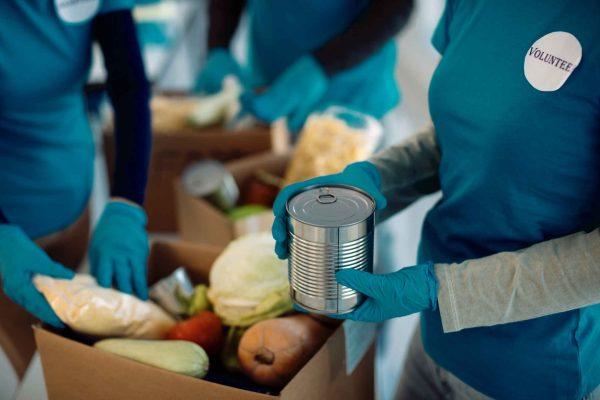
Food banks and community organizations are feeling the pressure. Philabundance in Philadelphia and other regional food banks report unprecedented demand, with lines stretching for blocks. In Phoenix, the St. Mary's Food Bank has seen a 30% increase in visits since the SNAP changes took effect. "We're seeing families who never needed us before," said a volunteer coordinator in Maricopa County. "They're working, but they just can't make ends meet."
The situation is particularly acute in Latino neighborhoods, where food insecurity was already higher than the national average. According to a recent report by the Urban Institute, Latino households are nearly twice as likely as white households to experience food insecurity. The SNAP cuts threaten to widen that gap.
Some states are trying to mitigate the damage. Illinois, for example, has announced a one-time $400 payment to families who lost SNAP benefits. But such measures are temporary and do not address the underlying problem. In Texas, where recent floods devastated communities, replacement benefits have been extended, but many families are still struggling to navigate the system.
Advocates argue that the new work requirements are counterproductive. "People want to work, but they need support to get there," said María Fernanda, a caseworker at a community center in Los Angeles. "These rules assume that everyone has stable employment, but that's not the reality for many immigrants and low-wage workers."
The federal government defends the changes as a way to encourage self-sufficiency. But experts point out that the majority of SNAP recipients who can work already do. The new rules are more likely to create bureaucratic hurdles than to move people into jobs.
As the holiday season approaches, food banks are bracing for even greater demand. "We're not going to turn anyone away," said a director at a food bank in Miami. "But we're running out of resources. We need the government to step up."
For now, millions of families are left to navigate a system that seems designed to exclude them. The promise of food security, once a cornerstone of American social policy, is slipping away for the most vulnerable. As one mother in Houston put it, "We're not asking for a handout. We're asking for a chance to feed our kids."