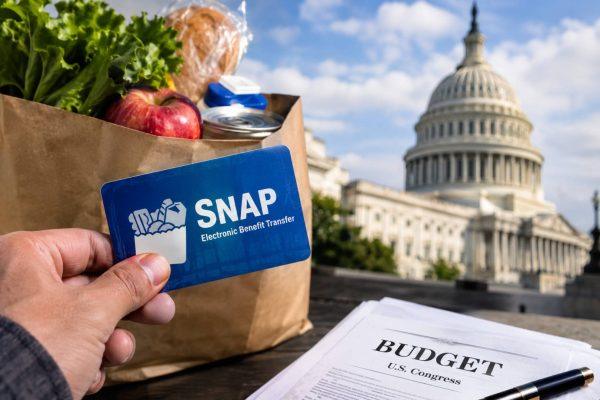
As lawmakers return to Capitol Hill after the August recess, millions of families who rely on the Supplemental Nutrition Assistance Program (SNAP) are watching closely. A provision in the HR 1 budget law will shift 75 percent of administrative costs to states starting October 1, a change that could force cuts in food assistance just as many households are already struggling to put meals on the table.
For Latino communities across the country, the stakes are especially high. In states like Texas, California, Arizona, and New Mexico, where Latino families make up a significant share of SNAP participants, the funding shift could mean longer waits for benefits, reduced access to enrollment assistance, and fewer resources for outreach in Spanish-speaking neighborhoods.
Stricter work rules have already cut millions from the rolls
The new work requirements, which raised the age limit for able-bodied adults without dependents from 54 to 64 and lowered the age for dependent care exemptions to 14, have led to a sharp drop in participation. According to the Center on Budget and Policy Priorities, about 5 million people have lost SNAP benefits since the rules took effect, including more than 1.5 million children.
In many Latino households, the impact is compounded by language barriers and limited access to technology, making it harder to navigate the new paperwork and verification processes. Community organizations in cities like El Paso and Phoenix report that families are showing up to food banks not knowing they’ve been cut off until they try to use their benefits card.
Food banks stretched thin as demand surges
Nonprofit food distributors are feeling the pressure. In Arizona and New Mexico, local agencies have seen record numbers of visitors at distribution sites, often exceeding pre-pandemic levels. “We’re serving more families than ever, but we can’t replace a federal program that provided five times more meals than we could ever distribute,” said a coordinator at a food bank in Tucson.
The strain is particularly acute in rural areas and border communities, where food banks may be the only source of fresh produce and pantry staples. Volunteers in places like McAllen, Texas, and Las Cruces, New Mexico, are working longer shifts to keep up with demand, but many worry about sustainability if the funding shift goes through without a delay.
State budgets and the push for a delay
Looking ahead to 2027, states will also face penalties for administrative error rates, forcing them to either allocate more state funds or scale back other programs. That prospect has state administrators and hunger relief advocates urging Congress to pass a temporary postponement of the cost shift. They argue that states need more time to improve payment accuracy without cutting essential aid.
“This isn’t about politics; it’s about keeping families fed,” said a policy analyst with a Latino advocacy group in California. “A delay would give states the breathing room to adjust without harming the most vulnerable.”
The outcome of the upcoming votes will have a direct impact on the career paths of Latino professionals who work in social services and community health, as well as on the families they serve. For many, SNAP is not just a benefit—it’s a lifeline that keeps children healthy and parents able to work.
As the debate unfolds, food banks and community groups are bracing for what could be a difficult winter. They are calling on Congress to listen to the voices of the millions who depend on this program, many of whom are Latino and other communities of color.
The coming weeks will be critical. If no delay is approved, the cost shift could take effect as soon as October 1, leaving states with tough choices and families with fewer options. For now, advocates are urging lawmakers to remember that behind every statistic is a family—often a Latino family—that simply wants to put food on the table.