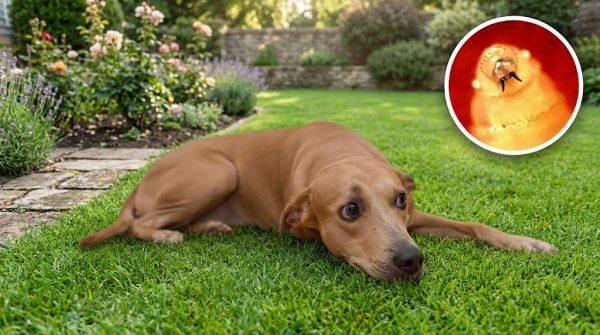
An unsettling discovery in Arizona has put pet owners and livestock producers on high alert: a domestic dog was found infested with New World screwworm larvae, and the parasite has now been confirmed in three states. The case, reported on October 26, 2026, prompted state agencies to activate emergency response protocols, and the USDA has verified 71 total cases across Arizona, Texas, and New Mexico, with 18 infestations still active and under quarantine.
For those unfamiliar, the New World screwworm is not a worm at all but the larval stage of the parasitic fly Cochliomyia hominivorax. Female flies deposit eggs in open wounds or natural body openings—eyes, ears, nose, mouth, and genitals—of warm-blooded hosts. Within 12 to 24 hours, larvae hatch and burrow into living tissue with a spiral motion, causing severe damage and a condition known as screwworm myiasis.
State veterinarian Ryan Wolker emphasized that local authorities had been preparing for this threat through public outreach and early surveillance. “Our goal is to ensure that veterinarians and pet owners recognize symptoms quickly and report suspected cases immediately,” he said. Health officials clarify that transmission occurs through direct contact with flies, not through contaminated food.
Why this matters for the Southwest
The screwworm is a notorious pest that historically devastated livestock industries across the Americas. Eradicated from the U.S. in the 1960s, it has reappeared in recent years, and this outbreak marks a significant expansion. The parasite affects a wide range of hosts, including cattle, swine, sheep, goats, horses, poultry, wildlife, and domestic pets—and occasionally humans.
For Latino communities in the region, many of whom work in agriculture or live near rural areas, the risk is tangible. Ranchers in Sonora, Chihuahua, and Texas border towns have long dealt with screwworm outbreaks, and this cross-border movement underscores the need for vigilance on both sides of the border.
Prevention and early detection
Livestock producers are urged to inspect animals regularly, especially after surgical procedures, castration, or birthing. Wounds should be kept clean and covered to prevent fly strikes. Pet owners should check their dogs and cats for any open sores or unusual discharge, particularly if they spend time outdoors.
“The key is early detection,” said Dr. Elena Martínez, a veterinarian in Tucson. “If you see a wound that doesn’t heal, or notice a foul odor or fluid, get your animal to a vet immediately.”
Agricultural economists warn that an uncontrolled outbreak could cause massive financial losses, disrupting meat and dairy supply chains. The USDA is expanding monitoring efforts, and state agencies are coordinating with Mexican authorities to track vector movements.
For those living in affected areas, the message is clear: stay alert, report suspicious cases, and protect your animals. The Texas elk case earlier this year was an early warning, and now the threat has reached household pets.
As the situation evolves, officials stress that cooperation between communities and agencies is essential. The screwworm is a formidable foe, but with vigilance and rapid response, its spread can be contained.