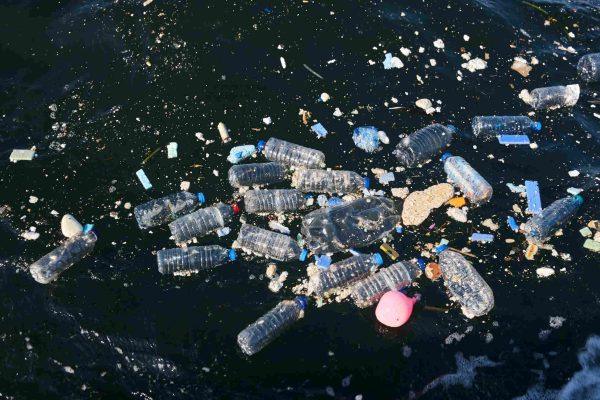
For two decades, satellites have been quietly documenting a strange transformation in the North Pacific. The Great Pacific Garbage Patch, that vast swirl of floating debris between Hawaii and the U.S. West Coast, is slowly turning cyan. It's a subtle shift, invisible to the naked eye, but unmistakable in the data collected by orbiting sensors between 2002 and 2022.
Researchers at the University of Bergen in Norway noticed that the blue and green bands of light reflected from the subtropical gyre were brightening simultaneously, creating a telltale cyan signature. Their analysis, published in recent scientific literature, points to a surprising culprit: microplastics. These tiny fragments, born from the sun and wave-driven breakdown of nets, bottles, and other plastic waste, are changing the way seawater absorbs and scatters light.
Why the ocean's color is a clue
The ocean's color is not just a pretty sight—it's a window into its health. Normally, phytoplankton and dissolved organic matter dictate the hues we see from space. But the Bergen team ran sophisticated computer models to rule out those natural variables. Only when they added microplastics as an active optical component did the models reproduce the observed cyan glow.
“Microplastics are like tiny mirrors suspended in the water,” explains Dr. Elena Martínez, a marine optics specialist at the University of Bergen. “They scatter sunlight in a very particular way, and that's what the satellites are picking up.” While she cautions that field campaigns are still needed to confirm the link definitively, the hypothesis is a major step forward in understanding the true scale of plastic pollution in our oceans.
For Latin American communities, many of whom depend on the Pacific for food, tourism, and livelihoods—from the fishing villages of Baja California to the coastal towns of Peru and Chile—this research hits close to home. The same currents that concentrate plastic in the North Pacific also affect the waters off our shores, and the ability to track these pollutants from space could be a game-changer.
A new tool to solve the 'missing plastic' paradox
One of the biggest puzzles in oceanography is the “missing plastic” paradox: we know millions of tons of plastic enter the ocean each year, yet we can only account for a fraction of it. Much of it sinks, degrades, or gets eaten by marine life, but a significant portion seems to vanish. The cyan signal could help solve this mystery by giving scientists a way to track microplastics from orbit.
If the relationship between microplastics and the color shift is fully validated, satellites could become a powerful tool for environmental monitoring. Governments and commercial entities could use them to identify critical cleanup zones, monitor the drift of plastic over time, and even predict where new garbage patches might form. This would be a huge improvement over current methods, which rely on slow, expensive ship-based sampling.
“We're talking about a potential revolution in how we monitor marine pollution,” says Dr. Martínez. “Instead of sending a boat to take a few water samples, we could look at the whole ocean from space and see where the plastic is concentrating.”
The implications extend beyond the Pacific. Similar color shifts might be detectable in other gyres, including the South Pacific, which affects the coasts of Chile and Peru. And as super El Niño events become more frequent, understanding how ocean currents and plastic interact becomes even more critical.
For now, the cyan hue of the Great Pacific Garbage Patch is a reminder that our plastic waste is not just floating out of sight—it's changing the very color of the sea. And with new satellite tools on the horizon, we may finally be able to see the invisible and act before it's too late.