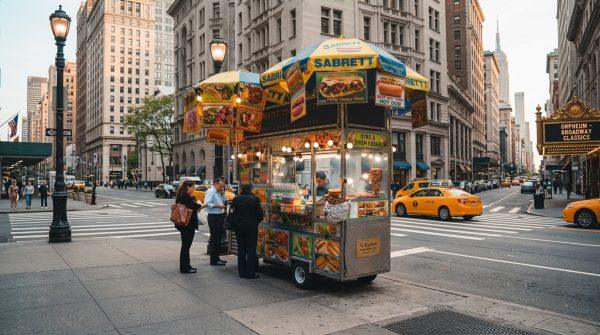
New York City has launched a pilot program to replace traditional gas-powered generators on food carts with rechargeable electric batteries, starting with ten units in Flushing Meadows Corona Park. The initiative, announced by local authorities, targets the iconic street vendors that define neighborhoods across the five boroughs—from the cuchifritos carts of El Barrio to the taco trucks of Jackson Heights—and aims to reduce the urban carbon footprint while improving quality of life for both vendors and customers.
The new battery systems eliminate the constant hum and toxic fumes of combustion engines, offering a quieter, cleaner experience in public spaces. Deputy Mayor for Operations Julia Kerson emphasized that vendors are a fundamental part of the city's identity, and this program positions Flushing Meadows as a benchmark for adopting responsible technologies. “Each business plays a vital role in the city’s development,” Kerson said, noting that the shift will facilitate a safer, more pleasant environment for everyone.
How the Electric Batteries Work
The rechargeable units provide constant, emission-free energy throughout a full workday, allowing vendors to operate in parks and crowded areas without the noise pollution typical of gas generators. Maintenance is simpler, and operating costs drop since vendors no longer need to buy fossil fuels. The compact design also makes it easier to move carts through the city’s diverse neighborhoods.
City officials calculate that scaling this technology across all food carts could reduce greenhouse gas emissions by 120,000 metric tons annually—the equivalent of permanently removing 30,000 vehicles from New York streets. That scale of reduction turns a technical upgrade into a comprehensive public health strategy, especially in densely populated areas where air quality is a persistent concern.
For Latino vendors, who make up a significant portion of the city’s street food workforce—many from México, Ecuador, Colombia, and the Dominican Republic—this transition could mean lower expenses and a better work environment. The pilot will be closely monitored to ensure battery durability and the availability of fast-charging stations before any citywide expansion is considered.
This initiative comes as New York grapples with broader environmental challenges, including rising temperatures and air pollution that disproportionately affect low-income communities of color. The program also echoes similar efforts in Los Angeles and Chicago, where electric food trucks are gaining traction. For a city where the aroma of al pastor and arepas mingles with the rumble of generators, the shift to silent, clean power could redefine the street food experience.
While the pilot is small, its implications are large. If successful, it could pave the way for a new standard in urban vending—one that respects both the cultural heritage of street food and the urgent need for sustainability. As Kerson put it, the goal is to make energy modernization a shared benefit for the entire community, ensuring cleaner air every day.
For more on how New York is addressing urban challenges, see our coverage of the City Council's bill targeting grocery price hikes and the funeral scams targeting Latino families.