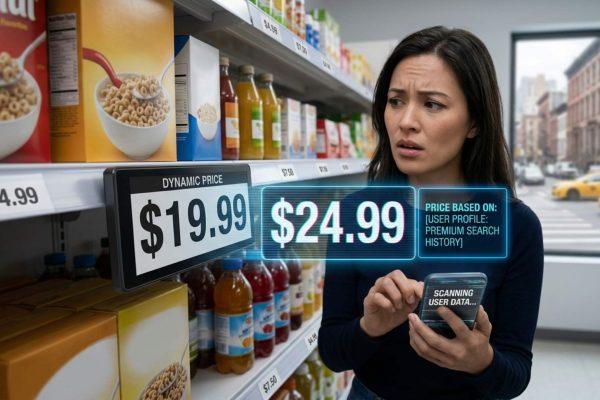
New York State is taking a bold step to protect consumers from a practice that feels straight out of a dystopian novel: surveillance pricing. Attorney General Letitia James and Senator Rachel May have introduced a legislative package that would ban companies from using your personal data—like your location, browsing history, or even your phone battery level—to charge you a different price than your neighbor for the same item. For Latino families already navigating rising costs in cities like New York, this could be a game-changer.
What Is Surveillance Pricing?
Surveillance pricing is the use of algorithms to analyze a shopper's behavior and adjust prices in real time. Imagine walking into a bodega in Washington Heights and paying more for milk because the system knows you're in a hurry or that you've bought it before. This isn't science fiction—it's already happening. A 2023 survey from the Attorney General's Office found that seven out of ten New Yorkers fear these technologies could drive up food costs. The proposed One Fair Price Act would make it illegal to vary prices based on non-consented personal data, forcing retailers to base any price changes on clear, public rules.
The practice is particularly insidious because it often targets vulnerable communities. For example, if an algorithm detects that a user has a low battery and is in a remote area, it might infer urgency and raise the price of a ride-share or a product. This kind of economic discrimination hits hardest where margins are thinnest—among working-class families, many of whom are Latino. As homeownership slips away and housing costs soar, every dollar counts.
How the Legislation Would Work
The legislative package includes two main bills: the One Fair Price Act and the Protecting Consumers and Jobs from Discriminatory Pricing Act. Together, they would prohibit companies from using sensitive information—like race, income, or health data—to set prices. They would also limit the use of electronic shelf labels in physical stores, which can change prices automatically based on demand or customer profiles. The goal is to restore transparency to a marketplace that has become increasingly opaque.
Under the new rules, any discounts or promotions—such as those for veterans or seniors—must be offered equally to all eligible customers. The Attorney General's Office would have the power to sue violators, and affected consumers could seek financial compensation. This is a direct response to the growing trend of 'rent now, pay later' models and other data-driven pricing strategies that often leave Latino tenants and shoppers at a disadvantage.
Impact on Workers and Communities
Beyond consumer wallets, the legislation addresses labor concerns. Unions like the United Food and Commercial Workers (UFCW) have warned that automated pricing systems often lead to job cuts and exploitation. Frank DeRiso, president of a supermarket workers' union, stated that replacing human tasks with algorithms should not be mistaken for innovation; it must be regulated to prevent the erosion of traditional jobs. For many Latino workers in New York's retail and grocery sectors, these jobs are a lifeline. The bill would limit the use of electronic labels in pharmacies and stores, preserving roles that rely on human judgment and customer service.
This move comes as other states watch closely. California, for instance, has seen its own housing and cost-of-living crises push many Latino families to seek affordable housing in Nevada. If New York's legislation passes, it could set a precedent for consumer protection nationwide.
For Latino New Yorkers, this is about more than just fair prices—it's about dignity. When a system uses your data to charge you more, it's a form of economic profiling. The proposed laws aim to ensure that technology serves to inform the customer, not manipulate them. As the debate heats up, one thing is clear: the fight for transparent pricing is a fight for equity.