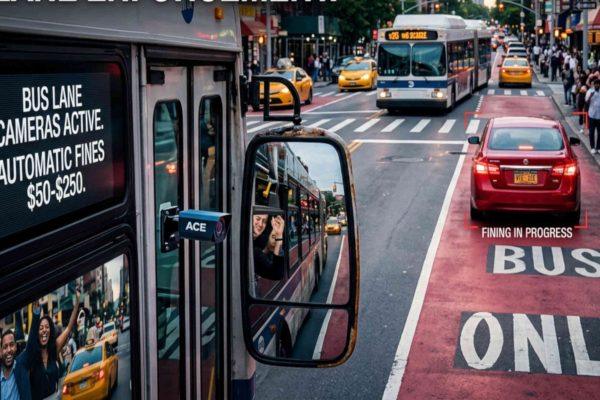
Starting this Friday, May 15, drivers in Queens and Brooklyn will face a new reality on the road: automated fines for blocking bus lanes. The MTA is expanding its Automated Camera Enforcement (ACE) program to critical corridors in these boroughs, aiming to speed up bus service for the millions of passengers who rely on it daily.
The system uses cameras mounted on buses to capture license plates of vehicles that illegally park, double-park, or drive in exclusive bus lanes. Fines begin at $50 for a first offense and can climb to $250 for repeat violations. The evidence—photos and video—goes directly to the New York City Department of Transportation, which issues the citations.
Which Routes Are Affected
The new enforcement focuses on two key routes: the Q60 in Queens and the B12 in Brooklyn. Both have long struggled with congestion caused by drivers blocking bus lanes, which delays service for thousands of riders. The ACE program already operates on 60 routes across the city, but this expansion targets some of the most problematic stretches.
For Latino communities in neighborhoods like Jackson Heights, Bushwick, and East New York, where bus ridership is high, this could mean more reliable commutes. Many residents depend on these buses to get to work, school, and medical appointments.
How the System Works
Exclusive bus lanes generally operate 24 hours a day, unless signs indicate different hours. The cameras are triggered when a vehicle remains stopped for more than five minutes. Exceptions include making a right turn at the next street or quickly picking up or dropping off passengers without blocking the bus lane.
Drivers should be aware that multiple buses can capture the same violation, so even if one bus passes, another may record the infraction. The system is designed to be airtight, with no room for disputes once the evidence is reviewed.
For those looking to avoid fines, the best strategy is simple: don't park or stop in bus lanes. If you need to make a quick stop, find a legal parking spot or use a side street. The MTA has made it clear that enforcement will be strict.
This initiative comes as part of a broader push to improve transit reliability across New York City. Similar programs have already shown results in Manhattan and the Bronx, where bus speeds have increased and violations have dropped.
For Latino drivers, this is another reminder to stay informed about traffic rules. If you're concerned about costs, check out our guide on how to cut car insurance costs in New York. And if you think you might have unclaimed funds, the state is sending automatic checks—here's how Latinos in the Bronx and Queens can claim theirs.
Ultimately, the success of this program depends on compliance. But for the thousands of bus riders who have endured delays, it's a welcome change. The MTA estimates that bus lanes can reduce travel times by up to 30%, making a real difference in daily life.