In the heart of Los Angeles, a 27-year-old multimedia designer named Adrián Hernández has built a digital lifeline for immigrant communities. His creation, Watcho, is a real-time interactive map that tracks immigration enforcement activity, offering a practical response to the fear and uncertainty that have gripped many neighborhoods across Southern California.
Hernández, a graduate of the University of California, developed the app after witnessing how constant street misinformation left families vulnerable. "People didn't know what was real or what to believe," he says. "We needed a tool that could cut through the noise and give clear, verified information."
How Watcho works
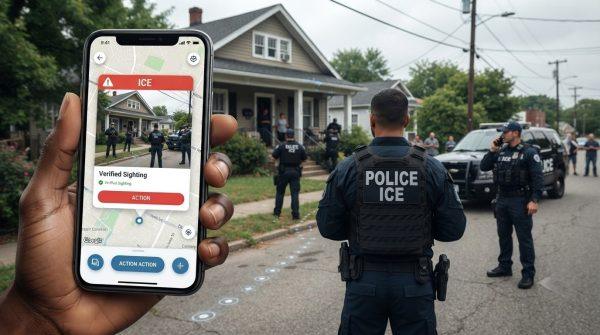
Watcho operates on a collaborative model, similar to navigation apps like Waze. Users report sightings of immigration officers, detentions, or other incidents in real time. Each report is reviewed by administrators to ensure accuracy before it appears on the map, helping to prevent false alarms.
The map uses a color-coded system: bright orange for sightings, red for active detentions, and green for other incidents. This visual approach allows users to quickly assess risk zones and make informed decisions about their daily commutes, whether driving or walking through the city's busy streets.
Privacy is a core principle. The app does not require names, addresses, or emails. Users can opt to share their location for nearby alerts, but they can also decline, ensuring complete anonymity. This has made it a trusted resource for those who might otherwise hesitate to engage with such technology.
Context: rising enforcement and economic strain
The urgency behind Watcho is clear. Under the current administration, federal agencies have intensified operations, detaining thousands of people in a matter of days, according to Department of Homeland Security records. Local businesses, many run by immigrant families, have suffered significant losses as customer traffic dropped. This economic contraction highlights how immigration policies ripple through communities, affecting not just social stability but also financial well-being.
Civil organizations have also raised concerns about tactics where officers disguise themselves as electricians, construction workers, or delivery drivers to surprise people. Watcho helps counter these strategies by providing a reliable channel for community alerts.
Beyond LA: a model for community defense
The app's success in Los Angeles has sparked interest from other counties in California. Civil rights organizations are studying how to replicate this model in cities nationwide, seeing it as a legitimate method of citizen self-protection in contexts of high institutional vulnerability.
Hernández's work is part of a broader trend of Latino youth using technology to defend human rights and promote transparency. Similar community-driven efforts, like financial support for immigrant entrepreneurs, show how digital tools can empower communities. The expansion of Watcho marks a historic milestone in how minorities manage their own security and civic resistance.
For now, Hernández remains focused on improving the app and expanding its reach. "This is about giving people the information they need to stay safe," he says. "It's a small tool, but it makes a big difference."