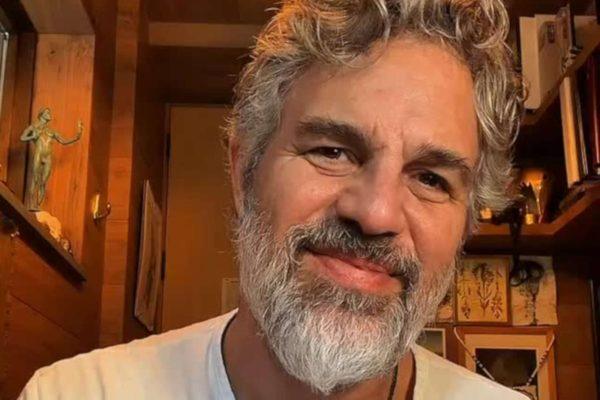
Mark Ruffalo, known for his roles in films like Spotlight and The Avengers, has traded the Hollywood spotlight for a quieter, more grounded life in the Catskill Mountains. Alongside his wife, Sunrise Coigney, and their three children, Ruffalo has transformed a 19th-century dairy farm in Callicoon, New York, into a thriving agricultural haven. It's a move that speaks to a deeper commitment: proving that sustainable living isn't just an ideal, but a practical, everyday reality.
The 50-acre property, once a working dairy, now serves as the family's primary residence. Ruffalo, who can often be found operating a vintage 1950s John Deere tractor, has embraced the rhythms of farm life. He's learning the intricacies of soil health and crop rotation, and the farm has become a hub for local collaboration. He leases lower fields to neighbors for hay production, and plans to introduce sheep to manage pastures naturally, avoiding chemical fertilizers and pesticides.
A solar-powered sanctuary with a purpose
The farm is powered by a substantial array of solar panels, a deliberate choice to minimize the family's carbon footprint. The organic garden yields everything from wild strawberries to seasonal vegetables, and the household composts and recycles diligently. But this commitment to clean energy is not just about personal lifestyle—it's deeply tied to the region's history and Ruffalo's own activism.
The property sits near the Marcellus Shale, a geological formation that became a flashpoint in the debate over hydraulic fracturing, or fracking. Ruffalo became a vocal opponent of the practice, which he saw as a direct threat to the Catskills' pristine water supply and the health of local communities. His advocacy, alongside many others, helped lead to New York State's 2014 ban on high-volume hydraulic fracturing. The fight continues, however, as new proposals using compressed carbon dioxide emerge.
In 2013, Ruffalo co-founded The Solutions Project, an organization that channels funding and support to community-led clean energy initiatives across the United States. The project has backed solar and wind projects in underserved communities, from Puerto Rico to the rural Midwest, reflecting a belief that the transition to renewable energy must be equitable and inclusive.
For Ruffalo, the farm is more than a retreat—it's a statement. "We're trying to show that you can live a good life, a rich life, without destroying the planet," he said in a recent interview. "It's about being a good ancestor."
The actor's dedication to sustainability has also influenced his professional choices. He's used his platform to advocate for environmental causes, from opposing the Dakota Access Pipeline to supporting the Green New Deal. His work has resonated with many in the Latino community, who often bear the brunt of environmental degradation in both the U.S. and Latin America.
As Leonardo DiCaprio's Manhattan eco-residence shows, celebrity environmentalism can take many forms. Ruffalo's choice to live on a working farm, however, offers a different kind of luxury—one rooted in simplicity, community, and a deep connection to the land. It's a model that challenges the notion that progress must come at the expense of nature.
In a world where luxury towers are literally sinking under their own weight, Ruffalo's farm stands as a reminder that true wealth lies in health, resilience, and stewardship. His story is an invitation to reconsider what we value and how we choose to live.
For those looking for real-world examples of leadership and social responsibility, Ruffalo's journey from Hollywood star to Catskills farmer is a powerful narrative. It shows that change is possible, one solar panel, one organic row, one community at a time.