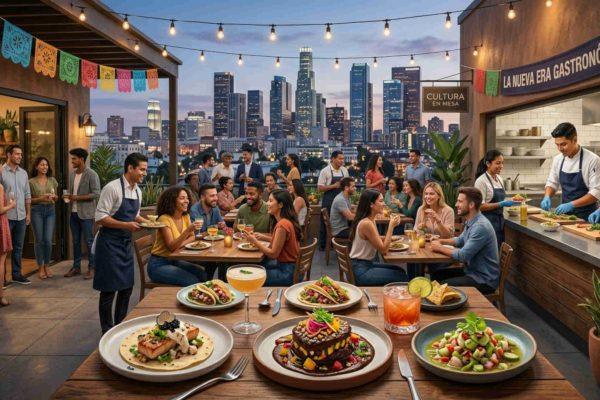
Los Angeles is quietly becoming one of the world's great food capitals, and Latino chefs are leading the charge. By 2026, the city is expected to rival London and New York not just in diversity but in quality, thanks to a culinary movement that honors tradition while embracing innovation. This isn't about fusion for its own sake—it's about chefs who know their roots and aren't afraid to experiment.
From Street Food to Fine Dining
Wes Avila, the mind behind Guerrilla Tacos, turned a simple taco into a canvas for high-end ingredients. His work shows that Latino cuisine no longer belongs to the budget category; it's a serious contender in the fine-dining world. Avila's approach—mixing Oaxacan flavors with luxury touches like caviar—has earned international attention and helped redefine what Latino food can be in the United States.
Bricia Lopez, co-owner of the iconic Guelaguetza in Koreatown, takes a different but equally powerful path. For her, the success of Latino cooking lies in constant evolution. "We don't just rely on memory of our homelands," she says. "We adapt, we learn, and we bring global techniques to our traditional recipes." At Guelaguetza, Oaxacan mole sits alongside dishes that reflect wellness trends and sustainability, creating a bridge between past and future.
A Mosaic of Cultures in Every Bite
What makes Los Angeles unique is how Latino cuisine interacts with other communities. Chefs like Ray Garcia, who cooks in a city where Asian, African American, and European influences collide, create dishes that are edible cultural maps. Garcia's menu at Broken Spanish, for example, draws from his Mexican heritage but incorporates techniques and ingredients from across the city. This openness isn't just a buzzword—it's the daily reality in L.A.'s kitchens.
The result is a food scene where a Peruvian ceviche can sit next to an Argentine empanada, and a Colombian bandeja paisa can share a table with a Japanese-inspired tostada. Restaurants like Selva in Long Beach and Kotosh in Lomita exemplify this blend, offering menus that don't stay in one country. As one diner noted, "The kind of place where curiosity is rewarded."
Latino Chefs as Cultural Ambassadors
This culinary renaissance isn't happening in a vacuum. It's tied to a broader cultural shift where Latino heritage permeates every layer of Los Angeles society. From the coffee shops in Silver Lake to the art galleries in Boyle Heights, Latino creativity is reshaping the city's identity. The rise of specialty coffee in L.A. is just one example of how Latino innovation is driving the local economy.
For travelers, the experience of visiting Los Angeles is now inseparable from its Latino food. Tourists no longer come looking for a single typical dish; they immerse themselves in a universe where Oaxacan mole dialogues with new trends in wellness and sustainability. This positions Latino flavors as the true protagonists of the city's economic boom, with chefs acting as cultural ambassadors.
Tradition Meets the Future
The success of this movement lies in its ability to adapt without losing its essence. Latino cuisine in Los Angeles is not about copying trends from elsewhere; it's about taking what works from global techniques and applying them to recipes that have been passed down for generations. This balance is what makes the city's food scene so vibrant and why it's attracting attention from food critics and travelers alike.
As one food writer put it, "Not everything I ate in L.A. made me proud of my heritage, but the best places did." That pride comes from seeing familiar flavors elevated, respected, and shared with a wider audience. Whether it's the tostadas at Holbox in downtown L.A. or the milanesas at Fuegos in South Central, each dish tells a story of migration, adaptation, and creativity.
Ultimately, Latino cuisine in Los Angeles is more than just food—it's a reflection of a community that refuses to be boxed in. By celebrating our seasoning in the United States, we don't just feed the body; we reaffirm our position as leaders of modern culture. And as the city prepares for its moment as a global gastronomic capital, one thing is clear: the future tastes like home, but it's never been more exciting.