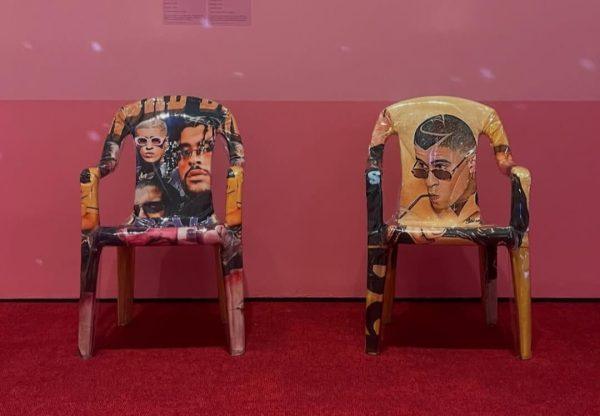
In a surprising yet fitting collision of pop culture and fine art, the Museum of Contemporary Art (MCA) Chicago has turned a familiar piece of Puerto Rican life into a centerpiece of its latest exhibition. The objects in question: white plastic garden chairs upholstered with the face of Bad Bunny.
Puerto Rican artist Edra Soto created the series “Sillas BB” (BB Chairs), transforming what many Boricuas recognize as backyard furniture into a commentary on identity, home, and the almost religious devotion the global superstar inspires. The chairs are part of the exhibition “Dancing the Revolution: From Dancehall to Reggaetón,” which runs through the summer.
From Backyard to Gallery
Soto began working with plastic garden chairs in 2014, inspired by the furniture she grew up with in Puerto Rico. “The furniture I grew up with was plastic. I couldn’t identify with high-end materials,” she explains. The fabrics she uses come from informal sources, capturing the essence of the bootleg merchandise that floods local markets when a figure reaches the level of fame Bad Bunny has achieved.
The connection between Soto and the object was sealed when Bad Bunny’s Grammy-winning album Un Verano Sin Ti featured two empty garden chairs in its conceptual art. For Soto, that image resonated deeply: a powerful symbol of waiting, home, and Caribbean nostalgia.
The exhibition at the MCA Chicago recreates a karaoke bar, where the Bad Bunny chairs invite visitors to rest between songs. A monumental photograph shows the star waving the Puerto Rican flag over a crowd, an image curators compare to Delacroix’s Liberty Leading the People. The chairs function as both an ironic and profound nod to the artist’s omnipresence in the daily lives of Boricuas.
Political Weight and Limited Edition
The showcase “Dancing the Revolution” demonstrates the political weight of Bad Bunny as a key figure in Puerto Rico’s social protests. In 2019, he paused his world tour to lead the protests that ousted the governor of Puerto Rico. Soto’s chairs, therefore, are not just decorative objects; they are symbols of resistance and modern devotion.
Despite the success of the chairs at fairs like EXPO Chicago and museums in Kansas City, the series is a limited edition of just 15 copies. The reason is practical: Soto bought the fabrics online, but after Bad Bunny’s explosion in popularity—and possibly due to copyright restrictions—the materials featuring his face have vanished from the market. “I tried to reorder them and they never arrived. I don’t know what happened to my money,” the artist says with a laugh.
For now, the pieces at the MCA Chicago are covered in protective plastic, allowing visitors to sit on them without damaging the tapestry. It’s a fitting detail for an artist who has become a global icon, ensuring that Bad Bunny’s visual legacy remains intact while the public sings his hits in the heart of the gallery.
For more on Bad Bunny's cultural impact, check out our coverage of Bad Bunny and Romeo Santos making The New York Times' list of best living songwriters and his Met Gala 2026 look.