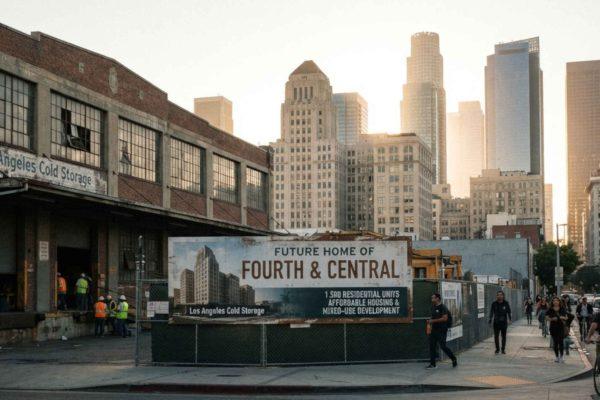
Los Angeles took a major step toward addressing its housing crisis this week as the City Council gave the green light to Fourth & Central, a $2 billion megaproject that will bring 1,500 homes to the heart of Skid Row. The development, spread across more than three hectares, dedicates a significant portion of its units to affordable housing, aiming to provide stability for low-income residents in one of the most underserved neighborhoods in the United States.
For Latino families in Los Angeles, who make up a large share of the city's rent-burdened population, projects like this represent a tangible effort to slow displacement. The Downtown Women's Center will oversee the affordable units, offering case management, nursing, and other support services to ensure tenants have more than just a roof over their heads. This kind of wraparound care is crucial for a community where many live paycheck to paycheck.
A Design That Respects the Past While Building for the Future
Fourth & Central isn't just about housing. The plan includes commercial spaces, offices, and restaurants designed to create a walkable, mixed-use neighborhood. Developers also committed to preserving an early 20th-century brick building on the site, a nod to the area's industrial heritage that many longtime residents—including Latinx Angelenos whose families worked in local factories—hold dear.
The project's scale drew intense scrutiny during the approval process. Critics worried about the impact on Skid Row's existing community, but the final version reduced the height of the main tower and eliminated a planned hotel component. These changes helped secure support from neighborhood groups and advocacy organizations that see the investment as a genuine opportunity for revitalization.
This isn't the first time Los Angeles has tried to tackle homelessness with large-scale development. Earlier this year, the city opened a tiny home village in Van Nuys offering rent-free 64-square-foot units, a more modest approach to the same crisis. Fourth & Central, by contrast, aims for permanence and density.
For Latino buyers watching the broader housing market, the challenges remain steep. A recent analysis suggests that a market reset is unlikely in 2026, making affordable rental projects like this one all the more critical.
Construction is expected to begin within two years, and the city hopes Fourth & Central will serve as a model for future developments that balance private capital with public good. If successful, it could reshape not just Skid Row, but the way Los Angeles thinks about housing its most vulnerable residents.