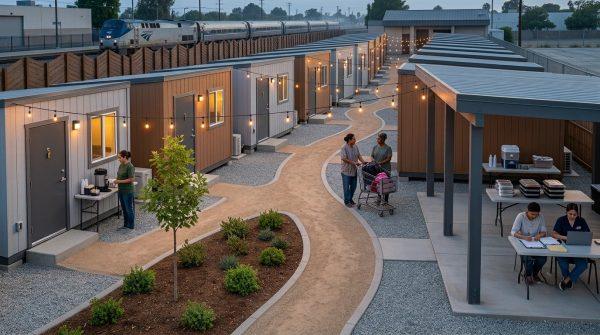
In the parking lot of the Amtrak station in Van Nuys, a new kind of housing solution has taken shape. Fifty prefabricated cabins, each measuring just 64 square feet, now offer rent-free shelter to people experiencing homelessness in Los Angeles. The project, led by the nonprofit Hope The Mission in partnership with local authorities, opened at the end of June 2026 and provides 100 beds in total.
These aren't your typical mass shelters. Each unit comes with heating, air conditioning, windows, electrical outlets, and a lockable door—giving residents a private space that many have not had in years. The idea is simple: restore dignity first, then build from there. As one program coordinator put it, "Having your own key changes how you see yourself."
A Bridge, Not Just a Roof
The Van Nuys tiny home village is designed as interim housing, but its mission goes beyond providing a temporary roof. Residents receive daily hot meals, access to showers, personalized case navigation, mental health and addiction support, and job training. The goal is to help people transition off the streets for good, avoiding the cycle of relapse into homelessness.
Hope The Mission already operates more than 35 similar shelters across Los Angeles. This particular site took 18 months to adapt from a municipal parking lot into a safe, structured community. The project fulfills legal agreements that require the city to expand its provisional shelter options, turning underutilized urban land into a lifeline for the most vulnerable.
Next door, a high-durability inflatable village that has been running since 2022 continues to operate, showing the organization's flexibility in using different types of interim infrastructure. But the cabin model has proven especially effective, offering better results in self-esteem and safety compared to shared dormitories.
The proximity to public transit is no accident. Residents can easily reach new jobs, integrating into the economic life of the metropolis. This is a far cry from the isolation that often comes with traditional shelter systems.
For Latino communities in Los Angeles, who are disproportionately affected by the housing crisis, this model offers a concrete alternative. While the city grapples with a record median home price of $930,000, projects like this show that innovative, low-cost solutions can work. The use of modular micro-architecture drastically reduces operational costs compared to traditional concrete housing, making it a viable path forward.
Municipal authorities are watching closely. They hope to scale this approach to significantly reduce urban homelessness through stable, humane actions. As one city official noted, "This isn't just about beds. It's about rebuilding lives."
The Van Nuys village stands as a symbol of what's possible when government and nonprofits collaborate. For the 100 people who now call these 64-square-foot cabins home, it's a chance to start over—with a key in their pocket and a plan for the future.