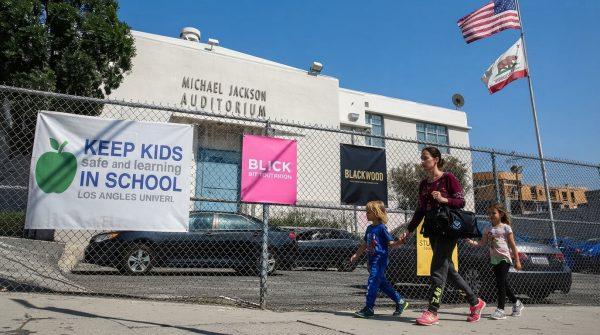
The Los Angeles Unified School District (LAUSD), the second-largest in the nation, is grappling with a financial and operational crisis as student enrollment continues its steep decline. With a 4% drop this year alone, the district now serves fewer than 400,000 students—a nearly 50% reduction since 2003. This demographic shift has triggered a projected budget deficit of $3.5 billion by June 30, 2029, forcing administrators to consider drastic measures, including school closures, mergers, and even demolitions.
A perfect storm of declining enrollment and funding cuts
The financial strain stems from California's attendance-based funding model, which ties state dollars to student presence. As enrollment falls, so does revenue, creating a vicious cycle. The district's chief financial officer, Saman Bravo-Karimi, warns that without intervention, LAUSD can remain solvent for only two more years beyond the current academic year. This urgency has prompted officials to explore rapid fiscal adjustments across all regional offices before federal regulators step in.
Compounding the issue, the district has pulled a consultant's contract at the last minute amid outcry from parent activists and employee groups. Superintendent Andrés Chait is now leading community conversations to redefine campus sizes, while projected job cuts exceed 6,000 positions—a significant blow to a workforce that numbered about 83,000 last year. Union leaders, including the California Teachers Association, are demanding structural solutions and have filed a lawsuit to recover nearly $6 billion in withheld state funds.
Infrastructure dilemmas: invest or close?
Meanwhile, LAUSD faces a separate challenge: aging facilities. Civil engineers have identified more than 1,200 school buildings that predate modern seismic codes, requiring over $2 billion in upgrades to meet safety standards. Voters approved $9 billion in bonds in November 2024, and the board has already allocated $322.6 million for reconstruction projects at schools like Menlo Avenue, 93rd Street, 96th Street, and 122nd Street, plus another $496.9 million for Normandie Avenue, 107th Street, and Narbonne High School. But critics question the wisdom of pouring millions into campuses that might soon close.
Board members Nick Melvoin and Rocio Rivas have clashed over funding flexibility and project selection criteria. Krisztina Tokes, executive director of facilities, defends the choices, noting that selected schools have enrollments between 500 and 700 students—above the district average. Yet, with some ultra-small schools like Glen Alta (55 students), Ann Street (71), Annandale (78), and Hillside (96), the pressure to consolidate is mounting.
Community resistance and the search for alternatives
Parents and educators are pushing back against abrupt closures. Community dialogue tables have been organized to discuss options, and some analysts suggest converting underutilized school spaces into community centers. However, state bureaucracy has slowed approval of such alternative plans, leaving the district in a precarious position.
The California Teachers Association's lawsuit seeks to force the state to release nearly $6 billion in funds that were set aside for schools but never delivered. District officials estimate that hundreds of millions of dollars could be recovered, but even that would not fully close the deficit. Meanwhile, the potential passage of Proposition 3 could further weaken the district's financial response capacity, according to fiscal analysts.
Budget oversight commissions are demanding detailed demographic reports before authorizing new expenditures, and taxpayers are calling for greater transparency. Union representatives have organized peaceful protests to reject mass layoffs and protect educators affected by restructuring.
As LAUSD navigates this crisis, the decisions made in the coming months will shape the educational landscape for generations. The challenge is not just financial—it's about preserving quality education for the diverse communities that depend on these schools. For many Latino families, who make up a significant portion of LAUSD's student body, the stakes are personal. The outcome will determine whether their children have access to safe, well-funded schools or face the disruption of closures and mergers.
For more on how Los Angeles is handling other pressing issues, see our coverage of rising rents across the West and the wildfire recovery gaps. And for a cultural perspective, check out Latino cinema at the InFocus festival.