When the 2026 FIFA World Cup kicked off across Mexico, the world’s eyes were on the stadiums in Mexico City, Guadalajara, and Monterrey. But in the rugged hills of Guerrero and the farmlands of Michoacán, a very different kind of game was being played—one with no referees, no fans, and no mercy.
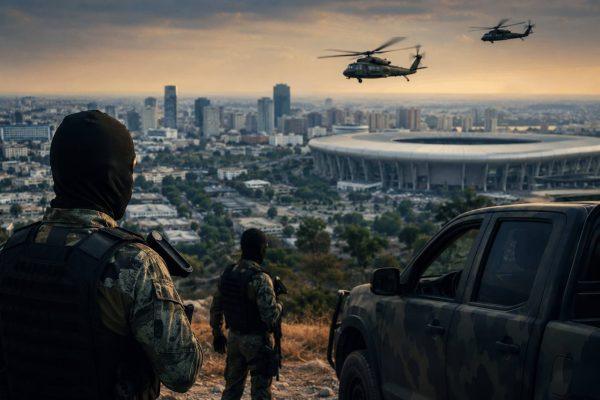
President Claudia Sheinbaum’s administration had staked its reputation on a secure, smoothly run tournament. To meet strict international security demands, the federal government moved more than 100,000 National Guard and military personnel into the three host cities. The logic was simple: protect the tourists, protect the matches, protect the global image. But that massive redeployment left vast stretches of the country’s most volatile regions dangerously understaffed.
According to Mexican security analyst David Saucedo, the centralized security matrix created a vacuum in states like Guerrero, Sinaloa, and Veracruz. “The tactical personnel were pulled from regional bases and concentrated in urban centers,” Saucedo explained. “That left remote municipalities at the mercy of cartel blockades.”
Drone Warfare in Guajes de Ayala
The consequences hit hardest in the rural community of Guajes de Ayala, Guerrero. There, the cartel known as La Nueva Familia Michoacana deployed weaponized drones carrying explosive payloads. While fans in Guadalajara cheered Mexico’s national team, civilians in Guerrero were sheltering in abandoned clinics and churches, trying to survive sustained artillery barrages and infantry incursions.
Local community watches posted real-time video evidence on digital networks, showing the attacks. But the Federal Security Cabinet initially dismissed the reports, according to sources familiar with the internal response. The priority was protecting the narrative of comprehensive national safety during the tournament cycle.
This asymmetrical warfare tactic—using cheap, commercially available drones rigged with explosives—marks a dangerous escalation. It allows cartels to strike with precision while keeping their fighters at a distance, making countermeasures far more difficult for an already stretched security force.
Logistics and Territorial Expansion
The media saturation around the World Cup didn’t just enable isolated offensives; it accelerated the logistical expansion of drug trafficking organizations across the country. In Sinaloa, Chiapas, and Michoacán, localized warfare spiked sharply. Naval officers and investigative journalists were targeted for assassination. Multiple cartel executions were reported in areas that had previously seen relative calm.
With transport terminals and highway networks under heavy tourism-related stress, cartels moved substantial contraband shipments and secured new distribution routes. Local law enforcement, restricted to athletic site logistics, had little capacity to intervene. The result: cartel networks strengthened their operational holds in regions that were already fragile.
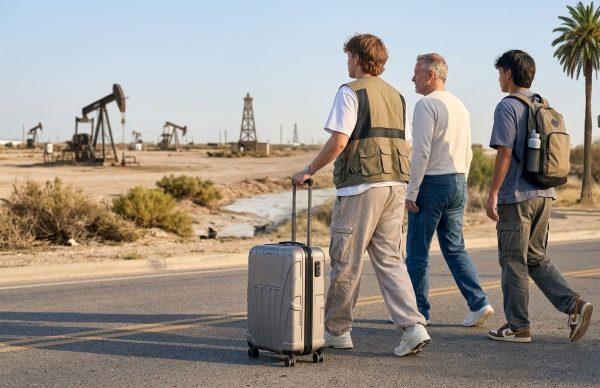
This dynamic is not new. As we’ve seen in Texas cartels reversing smuggling routes, the flow of drugs and weapons is constantly adapting to security pressures. The World Cup simply provided a perfect window for adaptation.
The Human Cost of Selective Security
Although the Mexican phase of the tournament concluded without high-profile security failures inside official FIFA perimeters, the selective nature of the government’s safety protocols produced a severe domestic displacement crisis in remote provinces. Families fled their homes, seeking safety in larger towns or crossing into neighboring states. The deep division between official press releases highlighting tournament success and the physical realities of besieged rural populations exposes the limitations of using mega sporting events to mask ongoing national security crises.
As the international spotlight fades, regional communities remain under the structural control of expanded cartel networks. The World Cup may have been a triumph for Mexico’s image abroad, but for the people of Guerrero and Michoacán, it was a time of heightened vulnerability—and the consequences will last long after the last goal is scored.