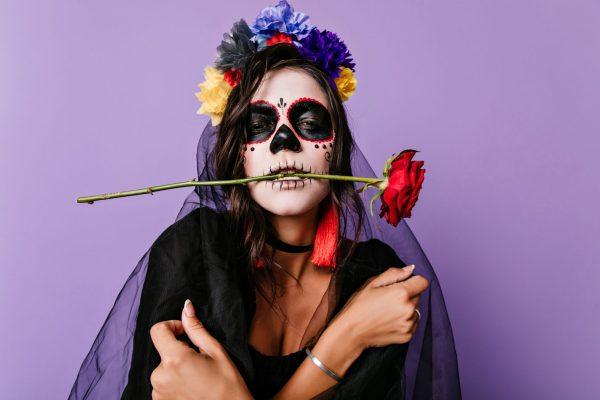
Every November, across México and the United States, families set up ofrendas that turn ordinary tables into intimate memorials. A faded photograph of an abuela, a plate of mole that only she made right, a scattering of cempasúchil petals, and perhaps a song that instantly brings her back. But not every altar tells the same story. For LGBTQ Latinos, this tradition has become a way to honor not just the people who raised them, but also the friends who became family and the queer voices who shaped their communities.
Día de los Muertos has its roots in México’s Indigenous heritage, celebrated primarily on November 1 and 2. It’s a time when generations come together through rituals that have endured for centuries. As Latino communities have expanded across the U.S., the celebration has evolved, taking on new meanings and forms. In cities like Los Angeles and Chicago, LGBTQ Latinos are infusing the tradition with their own experiences, creating public altars and festivals that recognize those whose contributions have often been left out of mainstream family histories.
Queer stories on the ofrenda
In Los Angeles, the Latino Equality Alliance has brought this vision to life through its Calavera LGBTQ Festival. The annual event, held this year on October 24 in Boyle Heights, blends Día de los Muertos customs with art, music, and collective remembrance. It’s a space where LGBTQ and Latino communities come together around a tradition many grew up with at home, but now with a broader, more inclusive lens.
The movement extends beyond a single event. In Chicago, LGBTQ Latino students have created ofrendas that pay tribute to queer figures like activist Sylvia Rivera and Mexican LGBTQ rights pioneer Nancy Cárdenas. Their photos sit alongside those of beloved relatives, giving younger generations a chance to learn about the people who opened doors before them. It’s a subtle but powerful shift: an altar can now hold a grandfather’s portrait next to that of a queer activist, a childhood friend beside an elder. No one has to compete for a place in the story.
This blending of personal and political remembrance is part of a broader trend. As traditional ofrendas appear in public spaces across NYC and LA, many are adding layers of meaning that reflect the diversity of Latino identities. The holiday, once seen as a strictly family affair, is becoming a canvas for community-wide storytelling.
Chosen family takes its place
Chosen family isn’t unique to the LGBTQ community, but for those who have found acceptance, friendship, or guidance outside traditional family structures, these bonds carry a special weight. Día de Muertos offers a familiar way to honor them. Friends can gather to build an altar, share stories, cook a favorite recipe, or play the music that defined a person’s life. It’s a way of saying, “You mattered, and you are remembered.”
Not every LGBTQ Latino has the same relationship with family, and not everyone celebrates the holiday. Some have supportive relatives who have always made room for them. Others have built their own support networks elsewhere. Both experiences are valid and belong in the conversation. The beauty of an ofrenda is its flexibility—it can be as personal as a handwritten note or as communal as a neighborhood festival.
For those looking to deepen their own observance, music often plays a central role. Songs that evoke memories can transform an altar into a living tribute, bridging the gap between past and present. And for those who want to bring the tradition home, pan de muerto is now widely available in U.S. stores, making it easier to recreate the flavors of childhood.
Ultimately, Día de los Muertos is about remembrance, but it’s also about connection. By including chosen family and queer pioneers on their ofrendas, LGBTQ Latinos are ensuring that the tradition remains alive, relevant, and inclusive. They’re proving that an altar can hold many stories, and that every story deserves to be told.