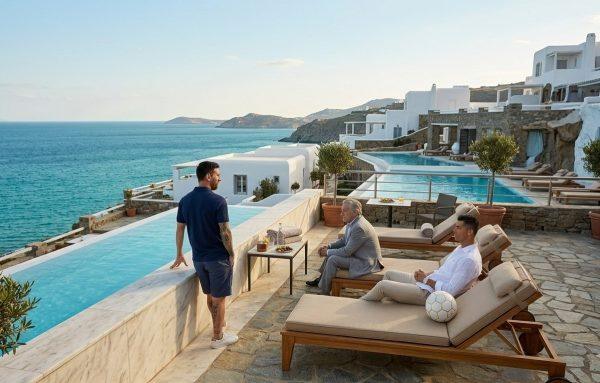
The landscape of high-end travel is undergoing a quiet revolution. Gone are the days when elite tourism was solely the domain of historic hotel chains. Today, a sophisticated traveler seeks more than just impeccable service and five-star amenities; they seek an experience infused with the essence of an icon. This has given rise to a powerful new trend: celebrity-owned hotels, where figures like Argentina's Lionel Messi, Spain's Rafael Nadal, and Hollywood's Robert De Niro have transitioned from brand ambassadors to visionary hoteliers.
The appeal is twofold. First, there's the compelling financial logic. In a post-pandemic world where 'revenge travel' and remote work have surged, the hospitality sector has proven remarkably resilient, offering investors net annual returns that can reach into the double digits. For celebrities, it represents a savvy way to diversify their portfolios. Second, and perhaps more potent, is the marketing magic. These establishments allow guests to temporarily inhabit the private universe of their role models, creating an emotional connection that a standard luxury hotel simply cannot match.
The Athlete's Playbook: Performance as Luxury
The world of sports has led this charge with strategic precision. The most successful ventures seamlessly translate an athlete's discipline and persona into a tangible guest experience.
Lionel Messi's MiM Hotels chain, with locations in Spain's Sitges, Ibiza, and Mallorca, captures a blend of premium relaxation and Mediterranean elegance, reflecting the footballer's own style. Similarly, accommodations tied to Cristiano Ronaldo integrate cutting-edge fitness technology and design elements that celebrate his career, even reportedly incorporating ambient sounds of cheering crowds. Rafael Nadal took a more hands-on approach, extending the philosophy of his tennis academy to a luxury resort in Cozumel, México, where guests can book professional lessons as part of their stay.
This focus on active, performance-oriented luxury resonates with a growing demographic. It's a world away from generic spa treatments, offering instead a curated slice of an elite athlete's regimen and environment.
Hollywood's Signature: Culture, Cuisine, and Contemplation
While athletes often emphasize energy and vitality, Hollywood's entrants into the hotel business have leaned into culture, gastronomy, and profound wellness. Robert De Niro, with his business ventures in places like Marbella, and director Francis Ford Coppola, with his family-owned retreats in Italy, have placed authentic, high-end cuisine at the heart of the guest journey.
Some of the most disruptive concepts, however, venture into the realm of lifestyle philosophy. A notable example is a concept attributed to Hugh Jackman in Australia, which promotes a complete 'digital detox,' prohibiting phones, alcohol, and caffeine to foster a total reconnection with nature. This level of specific, ideologically-driven curation is what sets these properties apart. You're not just booking a room; you're buying into a particular way of living, even if only for a weekend.
This trend of building narrative spaces mirrors efforts by Latino creators in Hollywood who are carving out their own lanes. For instance, David Bianchi is building his own space for Afro-Latino stories, and Josielyn Aguilera is transforming Hollywood's narrative for Trans Latinas. They, like the celebrity hoteliers, understand the power of a distinct, authentic point of view.
The map of elite tourism is being redrawn, with European capitals and exotic Latin American destinations alike benefiting from this influx of star-powered capital and innovation. Cities across the region are modernizing their infrastructure to attract these high-profile investments, which in turn draw a global clientele.
Ultimately, the rise of the celebrity hotel underscores a fundamental shift in what constitutes luxury. In 2026 and beyond, it is increasingly defined not by marble and gold leaf alone, but by a powerful, personal brand identity. It proves that while money attracts money, a compelling story and a unique signature remain the most exclusive amenities of all.