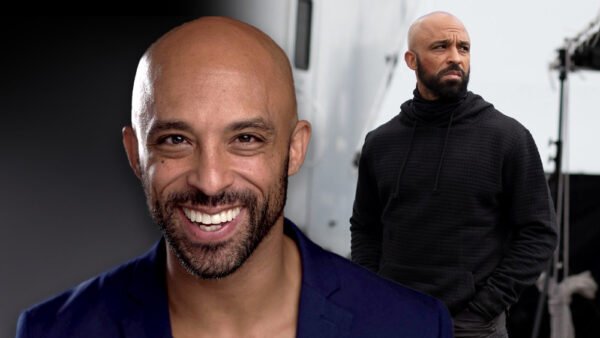
For more than twenty years, Afro-Brazilian actor, producer, and spoken word artist David Bianchi has carved out a creative life in Los Angeles. His arrival in the early 2000s came at a time when the industry's vision was far more limited. "Being ethnically ambiguous wasn't a cool thing in Hollywood," Bianchi recalls. "To be Afro-Latino wasn't a big thing. Even the term 'Latinx' didn't pop up until about eight years ago, so it was really challenging to get cast. That's why I started to produce."
Finding Community and Purpose Beyond the Screen
Growing up, Bianchi rarely saw his multifaceted identity reflected in film or television. It was in the vibrant spoken word scene of Los Angeles, at open mic nights and poetry slams, where he first connected with others who shared similar roots and experiences. This sense of belonging was empowering, but it also clarified a mission: if mainstream gates remained closed, he would build his own platform.
His entrepreneurial spirit isn't new. Long before film sets, Bianchi was producing raves in upstate New York, learning how to bring people together and create immersive experiences. That foundational work in event production directly informed his approach to storytelling. "When I think about the macro, I knew I was in a place that was in my purpose," he says of his formative years in theater.
Now, as an established producer, Bianchi is deeply committed to paying that forward. He often speaks about helping others "cross," a concept he admires in figures like Tyler Perry. "It's important to help people cross," he explains. "Whether I'm hiring people of different diasporas—that stuff means a lot to me, because for me, I needed people to help me cross."
A Mission-Driven Vision, From Improv to Dystopia
This philosophy manifests in projects like The Catalyst, a film Bianchi has been developing since 2017. Its creation was unconventional: the entire script emerged from seven intense hours of improvisation between actors. This raw, collaborative process reflects Bianchi's dedication to authentic, character-driven narratives that break from traditional Hollywood formulas.
His artistic lens is further shaped by a profound love for dystopian and science fiction. The genre's capacity for social commentary and exploring complex futures resonates with his view of art as a mission. For Bianchi, these speculative stories are not mere entertainment; they are frameworks for examining the present.
The rewards of his path are deeply personal. He recalls a powerful moment when an actor approached him after a project wrapped. "You changed my life. I joined SAG because of you," they told him. For Bianchi, who remembers the profound significance of receiving his own SAG card, such feedback is life-defining. It underscores the impact of creating tangible opportunities within an industry that can feel exclusive.
Navigating the highs and lows of Hollywood, Bianchi remains guided by a steadfast faith in his journey. "Life is what happens when you're making plans," he reflects. "If I continue to do my best, then God or the universe will take care of me." This grounded perspective has been his constant. "There was never a part of me that believed I wouldn't make it," he affirms—a powerful message for the next generation of Afro-Latino artists looking to tell their own stories.
Bianchi's story is part of a broader, vital conversation about the nuances of Latino identity in the US, where heritage is multifaceted. It also connects to other artists, like Amirah Vann, who are championing Afro-Latino representation on screen, proving that the community's narratives are as diverse and dynamic as the cultures they spring from.