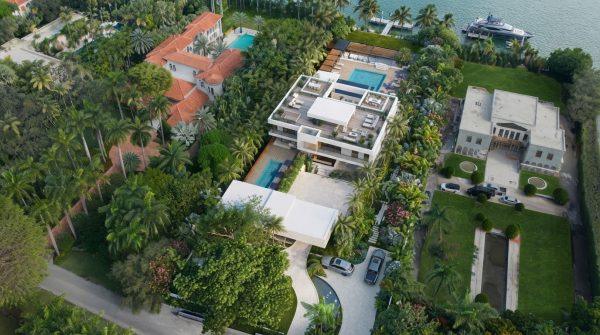
Miami's Indian Creek Village, often called the Billionaire Bunker, is more than just a playground for the ultra-rich. It's a tightly regulated community where the rules are as lavish as the mansions. Since its founding in 1939, this exclusive island in Biscayne Bay has maintained a level of order that would make any homeowners' association proud—or perhaps a little intimidated.
Guillermo Olmedillo, the village manager, recently detailed the extent of these regulations in an official statement. The Territorial Development Code, a hefty 103-page document, outlines obligations designed to protect the area's architectural elegance. For residents like Jeff Bezos, Mark Zuckerberg, Tom Brady, Ivanka Trump, and Jared Kushner, compliance isn't optional—it's enforced with daily fines of $500 for any violation.
Architectural restrictions and construction rules
The code leaves little to chance. Helipads and private aircraft landing areas are strictly prohibited on residential properties. Each primary building must have at least 5,000 square feet of gross floor area, with 75% of that space under the main roof. Building coverage is capped at 25% of the lot, meaning at least 55% must remain green or pervious open space. Even the grass has a limit: it can't exceed 15 centimeters in height. Real estate signs must be made of sealed wood with two coats of paint—no exceptions.
These rules aren't just about aesthetics; they're about maintaining a certain lifestyle. The island's exclusivity is protected by limiting what can be built and how. For a community that values privacy and tranquility, these measures ensure that no single property disrupts the harmony of the whole.
Outdoor spaces and daily life
The regulations extend to outdoor living. Swimming pools are banned in front yards, and perimeter walls can't rise above 7 feet. Pet owners are limited to three animals per household, a rule that applies to groups and packs alike. Commercial events or promotional parties in private mansions are off-limits, keeping the island's atmosphere strictly residential.
Even the smallest details are covered. The code mandates that all construction adhere to specific dimensions, and any changes to docks or waterfront access require special permits from Miami-Dade County. Backup generators, essential in hurricane-prone South Florida, are subject to strict size and placement restrictions. It's a level of oversight that ensures the island remains as pristine as the day it was incorporated.
For those who can afford a home here—many mansions exceed $100 million—the rules are part of the appeal. They guarantee that the neighborhood retains its character, free from the chaos of unchecked development. As Olmedillo noted, the code is designed to protect the architectural elegance of the sector, a mission that has been successful for over eight decades.
Indian Creek's approach might seem extreme to outsiders, but for its residents, it's the price of paradise. The island's strict enforcement of its development codes mirrors the broader tensions in Miami between growth and preservation. While some may see the rules as overbearing, they're a testament to the community's commitment to its own vision of luxury living.
As Miami continues to evolve, with new luxury developments like Kaká's Bal Harbour condo and the Miami Vice reboot filming in the area, Indian Creek remains a bastion of old-school exclusivity. Its rules may be strict, but they're also a reminder that in the world of the ultra-wealthy, order is the ultimate luxury.
For those looking to understand the dynamics of Miami's elite neighborhoods, Indian Creek offers a fascinating case study. It's not just about the money—it's about the meticulous management of space, aesthetics, and community standards. And in that regard, the Billionaire Bunker is in a league of its own.