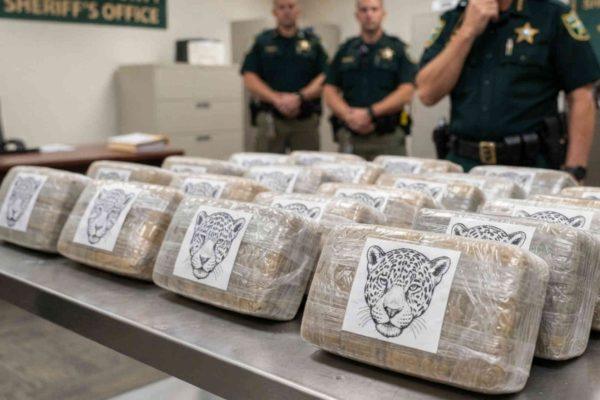
In a move that blends Florida's reputation for the bizarre with a dose of law-enforcement humor, Brevard County Sheriff Wayne Ivey has issued a public invitation: if you lost a significant amount of cocaine in the Atlantic, your local sheriff's office is happy to reunite you with it.
An alert citizen spotted the packages bobbing in the water near the coast and alerted authorities. When deputies arrived, they recovered 18 kilos—roughly 40 pounds—of cocaine, neatly wrapped in waterproof material and stamped with a distinctive black-and-white jaguar head. The find, which likely fell from a boat navigating regional waters, has sparked a wave of online reactions.
Instead of the usual terse police statement, the Brevard County Sheriff's Office took to social media with a tongue-in-cheek post. Sheriff Ivey, known for his folksy and direct style, addressed the "owner" directly, assuring them they could come to the station and reclaim their property without any hassle—though he added a caveat: the department would also provide a secure place for them to stay, just in case anyone else tried to steal the misplaced merchandise.
Humor as a tool in the fight against drug trafficking
This isn't the first time Sheriff Ivey has used social media to engage the public, but the cocaine post has gone viral, drawing thousands of comments and shares. The sarcastic tone is a deliberate strategy, according to communications staff, who say it helps build community trust and often leads to tips. "We're not just a bunch of robots in uniforms," said a department spokesperson. "We live here too, and we know how to talk to people."
The discovery is part of a larger pattern along Florida's coastline, where drug smugglers often use the ocean as a highway. The jaguar head marking suggests a specific cartel or trafficking organization, though investigators are keeping details close. The packages were well-protected from water damage, indicating they were prepared for a long journey—perhaps from the Caribbean or Central America, where jaguar imagery is common in local lore.
For many in the Latino community, the jaguar is a powerful symbol, appearing in art and mythology from México to Argentina. The irony of a jaguar-stamped cocaine shipment washing up on Florida's shores is not lost on observers, who see it as a reminder of the complex ties between the drug trade and the region's cultural heritage.
While the sheriff's invitation is clearly a trap—no one expects the actual owner to walk in and claim the drugs—the post has become a talking point. "It's classic Florida," said a local resident. "You never know what you'll find on the beach, and you never know what the sheriff will say next."
The investigation continues, with deputies tracking the possible origin of the shipment. In the meantime, the 18 kilos are safely stored in an evidence locker, awaiting either a very foolish claimant or a court order for destruction. As Sheriff Ivey put it, "We're happy to hold onto it for you, but we'd rather you not come get it."
This incident echoes other Florida oddities, like the state's $3 billion in unclaimed money—though this particular lost property is far more illicit. And for those thinking of a beach vacation, remember that rattlesnakes also share Florida beaches, so watch your step.
For now, the sheriff's office is enjoying the viral moment, but the serious work of interdicting drugs continues. As one deputy noted, "We'll take the laughs, but we're also sending a message: if you're going to smuggle, you might lose your cargo—and your freedom."