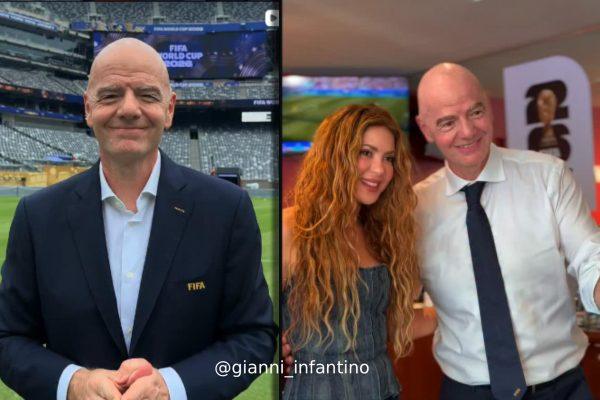
When FIFA released its annual financial report, the numbers that caught the attention of fans from Buenos Aires to Mexico City weren't just about World Cup revenues or sponsorship deals. They were about the man at the top: President Gianni Infantino, whose total compensation package reached approximately $6 million for the year.
The disclosure, buried in the governing body's centralized balance sheet, reveals that Infantino's base salary remained flat at 2.6 million Swiss francs. But his variable performance bonuses jumped by 33%, adding 550,000 Swiss francs to reach a ceiling of 2.2 million Swiss francs. Financial analysts point to FIFA's expanded commercial revenue cycles—from global sponsorships to media broadcasting rights tied to the 2026 World Cup expansion—as the drivers behind the increase.
What This Means for Latin American Football
For fans across Latin America, where football is more than a sport—it's a cultural lifeline—the numbers hit differently. In countries like Argentina, Brazil, and Colombia, where economic inequality is a daily reality, the idea of a single executive earning what amounts to roughly €16,700 per day feels out of step with the grassroots passion that fuels the game. Social media platforms like X have been buzzing with reactions, with some users joking that Infantino's bonuses scale alongside fan frustration.
Yet, the debate isn't one-sided. Sports business professionals note that FIFA operates as a global enterprise generating multi-billion-dollar turnovers. From that perspective, Infantino's compensation aligns with standard private-sector corporate practices. Still, for many Latinos, the question lingers: should the head of a non-profit sports organization be paid like a Fortune 500 CEO?
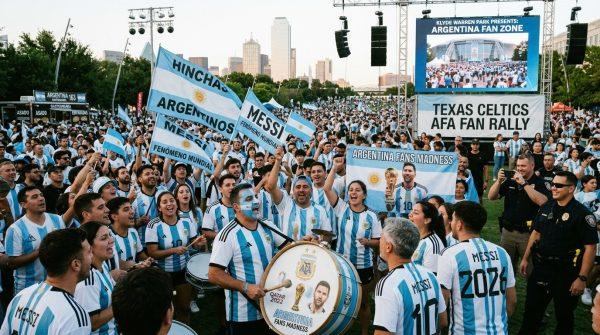
Infantino's tenure has also been marked by geopolitical and administrative challenges that go beyond the pitch. During the current World Cup cycle, his office has navigated controversies, including allegations of organizational favoritism toward the Argentine national team—a topic that has sparked heated discussions from Rosario to Rome. Additionally, high-profile geopolitical intersections have disrupted routine match disciplinary protocols, forcing FIFA to balance diplomatic pressures with its commercial brand equity.
One incident that drew particular attention was the controversy surrounding a red card decision involving a player named Balogun. After a reported phone call between Infantino and former U.S. President Donald Trump, FIFA lifted the suspension, sparking outrage in Belgium. For Latino fans, this raised questions about transparency and influence in football governance. You can read more about that in our piece: FIFA Lifts Balogun's Red Card After Trump-Infantino Call, Sparking Outrage in Belgium.
Similarly, the refereeing department has faced scrutiny. FIFA's refereeing chief denied that Infantino influenced a controversial goal in Argentina's favor, a story that resonated deeply with fans across the continent. For context, check out: FIFA Refereeing Chief Denies Infantino Influence in Argentina's Controversial Goal.
Meanwhile, the financial landscape of football continues to shift. The 2026 World Cup, co-hosted by the U.S., Canada, and Mexico, has already begun reshaping salary expectations. Stars like Lionel Messi and Rodrigo De Paul headline MLS salary rankings, as Inter Miami's valuation soars. This trend underscores the growing economic power of football in the Americas, but it also highlights the disparity between player compensation and executive pay. For more on that, see: Messi and De Paul Headline MLS 2026 Salary Rankings as Inter Miami's Value Soars.
As FIFA continues to expand its commercial reach, the conversation about Infantino's salary is unlikely to fade. For Latino fans, who make up a significant portion of the global football audience, the issue is personal. It's about whether the sport's leadership reflects the values of the communities that sustain it. Whether you see Infantino's pay as a fair market rate or a symbol of excess, one thing is clear: the debate is far from over.